
 Genesis 9: 8-15
1st Peter 3: 18-22
Mark 1: 12-15
“After John had been arrested, Jesus came to Galilee proclaiming the gospel of God: ‘This is the time of fulfillment. The kingdom of God is at hand. Repent, and believe in the gospel.'” ( Mark 1: 15)
When Jesus Christ made this proclamation, what would have been the reaction of the people of Galilee. I suspect that many would have gone on with their daily work; some with a tired look on their faces. They have heard this before; many so-called prophets and messiahs must have gone through the villages, promising a new world, only to wind up dead at the hands of the Romans or Herodians. But there was something different about this Nazarene, something about his manner, his style. And he performed miracles of healing and more, acts not seen since the times of the great prophets! He made them believe that the longed for kingdom of God was just over the horizon. Then came a dark Friday on the outskirts of Jerusalem, where they saw their expectations, their hopes dashed, as they witnessed their messiah die on a Roman cross. Many must have went home to hide; crushed and angry. Others felt compelled to remain in Jerusalem, to mourn in hiding. Then came Easter morning, and the disciples who stayed, realized that the time of fulfillment had begun!
Fast forward to our present time; and when we hear this Gospel passage proclaimed, our reaction might be: “Yeah, right!” This reaction might be understandable; considering the fact that we all have just witnessed the most tragic mass shooting in a school in our history. The horror of it all, is that this is just the most recent of many mass shootings in our country, and none of our political leaders seem willing to do anything about it. We are also seeing a rise of bigotry, some of it born of fear, in the nation. We are becoming a divided people. Terrorism, war, threat of nuclear war, ethnic cleansing, hatred; seems to be the new reality in our world. So we may find ourselves calling up to the Father; “How can this be the time of fulfillment? How can the kingdom of God be at hand?”
And Jesus Christ responds, “Repent, and believe in the gospel.” “Repent;” we all need to reflect on our own individual lives and ask; In what ways, large or small, have we added to the pain our world is in? In what ways, large or small, has our inaction allowed evil and suffering to grow? And when we have an answer; when we are able to see the realities of our lives, we seek the forgiveness, and that healing that can only come from God. And in that moment, we experience the reality of the Good News, and we believe in the gospel. And the Good News that Jesus is revealing to us, is that through God, through living the Gospel, we are transformed. And with every transformation, the time of fulfillment draws closer. “The kingdom of God is at hand.”
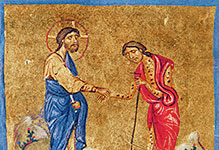

 The following link is to a blog post written by Father Thomas O’Shea, OFM. He is a friar of Holy Name Province, OFM. For a while, he was stationed at Saint Anthony Shrine, in downtown Boston. One of his duties was to be a Spiritual Assistant to my Secular Franciscan fraternity, where he contributed to our newsletter on a monthly basis. He continues write for the Provincial web site:
 Wednesday, January 31st, was the birthday of a Trappist monk and mystic, Father Louis, who was born in 1915. Most of the world will know him as Thomas Merton. Born to a New Zealander father and an American mother; he would eventually take up residence in the United States. While attending college in New York, he had a conversion experience, that would eventually lead him to the Abbey of Gethsemane, in Kentucky. In 1947, he became a professed member of the Trappist community; he was ordained a priest on May 26, 1949. The year before, 1948, he published his autobiography, “The Seven Storey Mountain,” which became the most popular book in American Catholic literature.
 Musings From St. Anthony's Walnut Tree