Night on Alvernia – The Friday Fictioneers

moon-and-sky1

Francisco walked through the trees of Mount Alvernia, alone with his thoughts.  His companions had withdrawn to their huts for prayer.  He grabs a branch and pulls himself up to a small ledge; he winces at the pain from the exertion.  He also feels the pain from the burden on his shoulders.  How will he govern so many brothers?  How will he continue to inspire them; so easy when there was only twelve of them?  He looks up and gazes on Sister Moon through the branches.  He feels a slight breeze; he raises his arms, “My God and my All!”

(Very late, I know!  I hope you enjoy it!)

The Cure – Friday Fictioneers

the shelfThe physician looks at his bottles of potions and salves.  He knows they have done nothing to cure this frail man’s infected eyes.  This situation calls for a drastic cure!  He has read in an ancient text that cauterizing the patient temples will stop the flow of pus.  He prepares the hot iron; the Poverello’s brother friars fidget.  When the holy man sees the red hot iron, he addresses it as “My Brother Fire!”  He prays it will be gentle to him.  The physician steadies his hand, and applies the iron.  The brothers flee the room!  “I felt nothing!”

Pace e Bene! – Friday Fictioneers

Photo prompt

The mother is wracked with fear!  Her child has a high fever.  The physicians cannot cure him.  In desperation, her husband seeks the holy man from Assisi.  She hears a knock on the door; she flings it open!  There is only a small barefoot man, dressed in a patched brown robe, with a cord around his waist.  He begs for alms; she almost slams the door!  But she stops, there is something about him.  She gives him some bread and fruit.  He touches her arm; “Pace e Bene!” he whispers and leaves.  She hears her child’s voice!

The above is a response to a challenge, that I found on The WRITE Place, and from Friday Fictioneers!

Praying Before the San Damiano Cross

Most High, Glorious God,

Enlighten the darkness of my heart,

And give me true faith, certain hope,

And perfect charity, sense, and knowledge,

Lord, that I may carry out

Your holy and true command.

(Prayer before the San Damiano Cross – Saint Francis of Assisi)

Francis and San Damiano CrossOnce a month, I go into Boston, MA, for a meeting with my spiritual director; who is a Franciscan friar at St. Anthony Shrine on Arch St.  I was crossing that street, on my way for my July session, when I ran into two of my former co-workers.  We exchanged pleasantries; I learned that the company was still having a rough time of it.  We said our goodbyes, and I entered the Shrine.  Now this all took place on July 7th, I was entering the seventh month of unemployment.  I have been sending electronic job applications, three to six of them on a weekly basis.  To date, I have had two telephone interviews, each lasting, on average, about fifteen minutes.  I have been to several job fairs, left resumes with prospective employers; never heard anything back.  Life is getting a little “interesting.”

Usually, when I enter the first floor chapel of the Shrine, I go to the left side, where the tabernacle with the Blessed Sacrament.  That day I went to the right side of the chapel, where in the sanctuary is a statue of St. Francis of Assisi, praying before a large representation of the San Damiano cross.  The original cross was in the Assisian chapel of San Damiano, where a young Francis went to pray.  The origins of the cross are shrouded in mystery, but it is made in the Byzantine icon style.  Praying before the cross, Francis heard the voice of Jesus speaking from the cross: “Francis, rebuild my church!”  The rest, as they say, is history!

I seated myself before the large replica of the San Damiano cross, and began to pray, saying over and over the Jesus Prayer: “Lord Jesus Christ, Son of the Living God, have mercy on me, a sinner.”  I was focused on the face of the Crucified Jesus.  I was drawn to the eyes, which are unique.  I cannot describe the experience, only to say that at that moment, I was in a different space.  The anxieties, the concerns, the worries, suddenly disappeared from my consciousness, if only for a moment in time.  A light dispelled the darkness that was in my heart.

Many of us, perhaps most of us, when times get tough, will pray to God for some kind of miracle that will solve all of our problems.  Usually we are hoping the Lord will influence the interviewer, or we will win the Lottery!  And miracles can happen, will happen, and does happen!  But what we can really hope; what we need to be aware of is that we are never alone.  We may be carrying a burden, but we do not carry it alone.  Jesus calls us to take up our crosses daily, and follow him.  The One who carried his cross to Calvary, knows our suffering, knows what pains, and fears weigh us down.  He is walking with us, encouraging us onward.  His Spirit is within us, filling us with peace, with hope.  We need only to keep our hearts; our souls open to that light.  And hear Jesus assure us, that over that dark hill of Calvary, a new dawn does await us!

A Franciscan’s Perspective: Blessed Ramon Lull, His Life and the Takeaway.

Blessed Ramon Lull“Therefore, any brother who, by divine inspiration, desires to go among the Saracens and other unbelievers should go with the permission of his minister and servant…As for the brothers who go, they can live spiritually among [the Saracens and nonbelievers] in two ways.  One way is not to engage in arguments or disputes, but to be subject to every human creature for God’s sake (1 Pet 2:13) and to acknowledge that they are Christians.  Another way is to proclaim the word of God when they see that it pleases the Lord, so that they believe in the all-powerful God-Father, Son, and Holy Spirit-the Creator of all, in the Son Who is the Redeemer and Savior, and that they be baptized and become Christians; because whoever has not been born again of water and the Holy Spirit cannot enter into the Kingdom of God (cf. Jn 3:5).  (The Early Rule of the Order Friars Minor; Chap XVI: 2-3, 5-7)The

Today, June 30th, the Catholic Church remembers Blessed Ramon Lull, who was a member of the Secular Franciscan Order.  He was born in 1232 AD, on the island of Majorca.  He was extremely well-educated and served in various royal courts on the Iberian Peninsula.  After listening to a sermon that touched his heart, he earnestly strived to live the Gospel life as a Secular Franciscan.  He promoted missionary work among the peoples of North Africa; working to establish mission colleges, where missionaries could learn Arabic.  He firmly believed that the way to bring non-believers to Christ was not with the sword, but through prayer and dialogue.  He took time away from his college building efforts, and lived the life of a hermit for nine years.  During this time, he produced a substantial amount of spiritual and philosophical works.  In 1314, at age seventy-nine, he went to North Africa, to be a missionary himself.  There he encountered a mob of hostile Muslims, who stoned him, and mortally injured him.  Some merchants were able to get him on a ship bound for Europe.  He did in 1315.

Francis of Assisi once described himself as a herald of the Great King, Jesus Christ.  He encouraged his brother friars to go out and preach about the love of God, to all they came in contact with, believer and non-believer alike.  But he also wanted their words to be backed up by their actions; by their works of charity, and showing respect to all they came in contact with.  In the first draft of the Order’s Rule (Regula Non Bullata), he describes the two ways his friars were to evangelize, by way of life, or open proclamation of the Gospel of Jesus Christ.

The Catholic Church, and especially the Church here in the Archdiocese of Boston, are being called to engage in a New Evangelization.  One way of evangelization is live our lives as believers of the Good News; as those who have a relationship with God through Jesus Christ.  This relationship should color how we interact with others, in our families, our workplaces, and in the marketplace.  The other is to never be shy about sharing what our personal encounter with Christ has meant for us; what it has changed in us.  We share our struggles with our faith; we share the joys of our faith.  And we have the courage to invent others to come and see.

Evangelization is something God is calling us to be involved in, in our world today; right now, right here.  We are all called to be heralds of the Great King!

Laudato Si’ is Out; And it is Shaking Things Up!

Laudato Si 2On June 18th, the Vatican officially released Pope Francis’ encyclical on the environment:  “Laudato Si’.”  Truth be told, I have not actually read the document myself; I am basing my own observations on the analysis and commentary of others, whose opinions I trust.  Chief among them is John Allen, Jr. of Crux who has done some analysis on the encyclical.

The theological analysis of the document I have; comes from Father Dan Horan OFM, of Dating God, who gives a Franciscan perspective on the encyclical.  The other comes from Jay Michaelson, of Religion News Service.  He brings out some of the theological points in the document that he considers truly radical.

As a Franciscan, the theological points that grabbed my attention were found in Chapter 2: “Human life is grounded in three fundamental and closely intertwined relationships: with God, with our neighbors, and with the earth itself.”  And in Chapter 3: “Our ‘dominion’ over the universe should be understood more properly in the sense of responsible stewardship.”  To Western ears these statements may seem very strange, but they are not new.  If one was to get beyond the image of St. Francis of Assisi as a statue holding a birdbath, one can see a Francis who knew that because of his intimate relationship with God, he had to have an intimate relationship with all people, and all creation.  Joined intimately with Christ, through the Gospels, through the Eucharist, and prayer, he was fully open to, and accepted the reality that he shared a kinship with all people, with all creatures, with everything that exists.

Francis passed this realization on to his followers, through his words and his actions.  Sadly, some of his children did not realize the depth of his teaching, but in recent times, we are finally beginning to get the point.  In our Secular Franciscan Rule, we have Article 18: “Moreover they should respect all creatures, animate and inanimate, which bear the imprint of the Most High, and they should strive to move from the temptation of exploiting creation to the Franciscan concept of universal kinship.”

It is this idea of “universal kinship” that Pope Francis is calling on the world, on all of us, to realize, and to act on.  It is a call to change our way of life, that is abusing our earth, and live in ways that will enhance our planet.

I do plan to read this encyclical myself, and hopefully I will be able share my own insights with you soon.  Pace e Bene!

I Want to Fly to Assisi

Where would I go if could be immediately transported somewhere?  I and other bloggers were challenged to write a post, answering this question.

I would like to be soaring over the green Umbrian countryside of Italy, like a brown sparrow, heading towards the small Italian city of Assisi.  It is an ancient city; most of the buildings were built during the Middle Ages, still being occupied.  I am heading towards a large Catholic Basilica, the Basilica of San Francesco d’Assisi, the last resting place of Saint Francis of Assisi.

Saint Francis was born Giovanni di Pietro di Bernardone, the son of a wealthy cloth merchant.  His father, who made his money selling fine cloth to French merchants, nicknamed his son Francesco as a tribute to the French.  Francis was the city playboy; it was not a party if Francis was not invited.  He was a social climber, who longed to belong to the nobility, to become a knight.  He was a soldier, a prisoner of war, a veteran who was broken in body and soul.  And because of his brokenness, Jesus Christ entered into Francis’ heart; and Francis experienced a conversion, a conversion to the Gospel life.  He began to give his money to any poor person who asked for alms.  He went among the lepers, caring for them, washing their sores, and binding them with bandages.  In the solitude of caves, he began to develop a deep spiritual, prayer life.  He reflected on the gospels, he entered into an intimate relationship with God.  Francis strived to live the Gospel of Jesus Christ.

He gave away everything he owned, dressed like a beggar, in a grey, brownish robe.  He went about serving the poor, preaching in the streets, and marketplaces; proclaiming to all who would listen to him; that God loved them all.  Men, who heard his words, saw his lifestyle, were drawn to Francis, and soon he had twelve followers.  Twelve became a hundred; the hundred became thousands, all promising to live the Gospel of Jesus Christ, according to the example of Saint Francis.  They became the Order of Lesser Brothers, Order Friars Minor.  Women, like Clare of Assisi, were also drawn to this Troubadour of Christ.  With Clare, he formed a contemplative community of women, the Poor Ladies of Assisi, now known as the Poor Clares.  There were other men and women, farmers and tradesmen, wives and seamstresses, who also wanted to live the Gospel, and sought Francis’ guidance.  They became the Brothers and Sisters of Penance, the Third Order of St. Francis; today known as the Secular Franciscan Order.

I became attracted to St. Francis during my third and last year at the archdiocesan seminary.  I had decided to take years’ leave from the seminary; I spent the year with a Christian ecumenical organization which provided worship services in the National Parks.  I was sent to Yellowstone NP, lead services during the weekend, worked in the kitchen the rest of the time.  And in the midst of all that natural beauty, I read about Francis and the Franciscan life.  After two years, I entered formation to become a Friar.  I was to realize that God had another path for me, so I left the Friars, but the Franciscan spirit was already embedded in my heart.  I would later join the Secular Franciscan Order; I have been a professed member for over 25 years.  And I am always wishing I had the means to make a pilgrimage to Assisi, to visit that Basilica.

Francis died on the evening of October 3, 1226, at the age of 44 years old.  He was canonized a saint in 1228.  The friars were already beginning the construction of the Basilica.  The best architects, artisans and artists, the pioneers of the Italian Renaissance, were brought onto the project.  The Basilica was constructed in two levels, the upper church with vaulted ceilings, and large stain glass windows.  The lower church is more enclosed, but both levels are covered with beautiful frescoes, painted by Italian master artists.  The Basilica is considered an international treasure.  However, when the Basilica was finished; the Friars buried Francis in secret; for fear that rival cities would try to steal the remains.  They did such a good job hiding the burial site, that Francis’ body was lost until 1819.  When the burial site was rediscovered, a new crypt was constructed under the lower church.  The crypt has a small chapel, with an altar.  Above the altar is a stone coffin, containing the bones of St. Francis.  It is bound with iron straps, and an iron grill over the entrance.  The walls of the crypt are bare stone, simple, unadorned.  It is there I wish I could sit, contemplating, in the dim light, the last resting place of a man who continues to inspire Christians and non-Christians.  And in the stillness of that place, maybe I can hear a whisper, wishing me and all who come there: “Pace e Bene!”  “Peace and Good!”
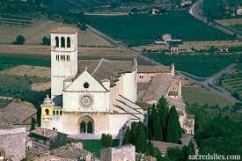
Basilica of Saint Francis lower Church Tomb of St Francis Upper Church

New Life of Saint Francis of Assisi by Thomas Of Celano Discovered

Thomas of Celano Missing Text

The Franciscan world is abuzz with the word that another biography of St. Francis of Assisi, written by Thomas of Celano has been found. A posting, dated January 27, 2015, on the English Speaking Conference of the Order Friars Minor (OFM) reported the details of how it was discovered. Scholars believe that Thomas of Celano wrote it shortly after writing the First Life of St. Francis and way before he wrote the Second Life. It is being reported that it contains information about Francis, which is missing from the other biographies; or had been changed in later issues.

It is know that multiple biographies were written about the Saint, one only has to look at the three volume collection: “Francis of Assisi, The Early Documents,” compiled and translated by Regis Armstrong, OFM CAP, J.A. Wayne Hellmann, OFM CONV, and William Short, OFM. That fact that we even have early versions for Francis’ biographies can be considered somewhat of a miracle. When St. Bonaventure wrote his “Life of Saint Francis (Legenda Maior)” and presented it to a General Chapter of the Friars, the Chapter accepted it as the official biography, and for reasons that still remain unclear, ordered all copies of earlier biographies destroyed. Again, I consider it a miracle that, according to Ewert Cousins, translator and editor of a collection of Bonaventure’s’ works; twenty copies of Celano’s first Life have survived, and only two copies of the second Life still exist. Now another work by Celano has come to surface! What new insights and revelations will come to light? The Franciscan world waits in anticipation!

Loring Crossman – Rest In Peace Brother

Loring Crossman, OFS

Loring Crossman, OFS

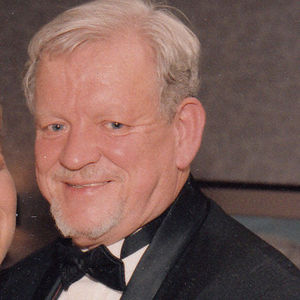
Last week I lost a friend, Loring Crossman, a fellow Secular Franciscan.  I was asked the day before his funeral, to give a brief eulogy for him.  I had no notes when I gave it, but to the best of my memory, here is what I said.

“Loring Crossman was my brother.  Through Baptism, we were brothers in Christ.  We were also brothers in Saint Francis of Assisi.  Loring was a person committed to ’ living the Gospel of Jesus Christ, in the spirit of Saint Francis of Assisi’  He succeeded me as Minister of our fraternity, and he lead the fraternity as we strived to adapt our lives to the new Rule of Life, that came out of Vatican II.  Like St. Francis, he led us with gentleness and compassion.  I only saw him lose his temper once, and that was at me over something I had failed to do.  Like St. Francis, he was generous with his time, talents, and treasure.  And like St. Francis, he had fraternity members who would provide comic relief.  I remember that once at the anniversary of our new Rule, St Bonaventure University, in New York, was sponsoring a seminar on the SFO Rule.  I drove there myself; Loring, Edwina and two other members were traveling together.  They had to pick up one member in Connecticut, because she was spending some time at the casinos!

Like St. Francis, Loring suffered from many illnesses.  In Francis’ final months, he spent some time with St. Clare and the Poor Ladies of Assisi, at San Daminao monastery.  Francis stayed in a small hut on the monastery grounds.  He was suffering from blindness, stomach problems and other illnesses.  And his hut was being overrun by mice and other critters, which allowed him no rest.  Yet, in all that suffering, Francis was able to compose a most beautiful hymn, the first poem in the Italian language, “The Canticle to Brother Sun.”  It was Francis way of praising God, despite all his suffering.  And I am sure that Loring, despite everything he was going through, was able to continue praising God, to trust in His love.  Loring was able to say, with all his heart, ‘Welcome Sister Death, I am going home to the Father.’’