
So when he had washed their feet and put his garments back on and reclined at table again, he said to them, ‘Do you realize what I have done for you? You call me ‘teacher’ and ‘master,’ and rightly so, for indeed I am. If I therefore, the master and teacher, have washed your feet, you ought to wash one another’s feet. I given you a model to follow, so that as I have done for you, you should also do. (John 13: 12-15)
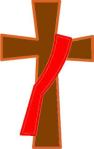
In the above Gospel passage, and in many others, Jesus stressed that those who follow him, must be willing to serve both those within the faith community, and those who are outside of it. Throughout all the Gospels, Jesus showed through his healing ministry, that the Messiah in their midst came as a servant to all. So his Church was also to be a servant to all, providing aid and support to the poor, serving those both within and without the Church. The Greek word “diakonia,” meaning “service,” has been applied to describe an aspect of life in the Christian Church. As related in the Acts of the Apostles, the Apostles appointed seven men to serve the Hellenist Christian widows. In Christian tradition, they became known as the first Deacons. As the Church grew, so did the number Deacons, performing works of mercy to the poor. They became an Order in the early Church, an official sign of Church acting as servant to all.
As Europe moved into medieval times, as Christianity became the dominant religion in Western Europe, as bishops and the Pope inherited secular power, changes began to take hold. The papacy and the episcopacy began to take on the trappings of the nobility; some adopting the view that they, with the nobility, deserve to be served by the serfs and peasants. The idea of a servant Church almost disappeared; it was preserved by laypersons who were inspired to serve the poor; by some bishops and priests who established hospitals, homes for orphans, lepersariums. An active Diaconate also declined, becoming a transitional position that a man would acquire for a period of time before being ordained to the priesthood.
With the Second Vatican Council, the concept of a servant Church was reborn. The Council, and many encyclicals since then, have stressed that all members of the Catholic Church are called to participate in the ministry of service to the poor, the homeless, and the forgotten. Fulfilling this call can take many forms: giving financial support to charities; volunteering for food pantries, kitchens, homeless shelters and centers; visiting patients in hospitals and nursing homes. We need to be open to promptings of the Holy Spirit; and discern whenever an opportunity to serve and show mercy, shows itself.
The Council turned once again to the Order of Deacons, to be a visible sign of being a Servant Church. About fifty years ago, Pope Paul VI reestablished the permanent Diaconate in the Roman Catholic Church. Men, married and single, from many countries, including the United States, have stepped up and been ordained. They are servants to the Church and the world, through liturgical participation, works of charity, preaching and being religion educators. In the Archdiocese of Boston newspaper, The Pilot, three Deacons have written an excellent column on the Permanent Diaconate of today. I invite you to go read it.
In our country, in our world, there are people in need, who feel abandoned and discarded. In such times the world needs a Servant Church, to bring hope and relief. A Church who follows Our Lord Jesus command; “I have given you a model to follow, so that as I have done for you, you should also do.”
‘
 Genesis 9: 8-15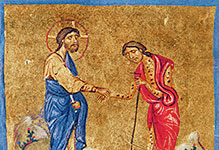
 ultimate hostess. She has invited an up and coming rabbi, and his followers, to her home. She has invited her friends and neighbors to come and come and hear Jesus speak and teach. And, of course, she must make sure everyone has had their dusty feet washed; that they have a beverage to drink, and something to eat. And she is beginning to feel stretched, and resentment towards her “do-nothing” sister begins to grow. Finally, she demands that Jesus tell Mary to get off her butt and start working. Jesus makes the point that Mary prefers to listen to the Good News, and this moment will not be taken away. Mary is being present to the Lord, fully present to the Word; open to the Word, letting the Word she hears change her. Martha is allowing too many tasks preventing her from being fully present to Jesus, she is not hearing the Good News, she is not allowing it to transform her. One can imagine that as Jesus tells Martha; “…you are anxious and worried about many things, it is with a tinge of sadness. Martha is missing something wonderful.
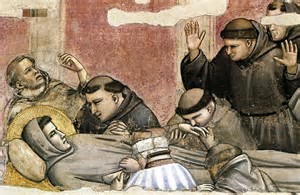 On this evening, October 3rd, throughout the world, members of the Franciscan family, and persons attracted to Francis of Assisi; are gathering in churches, chapels, friaries, monasteries, and convents. We gather to commemorate the passing of a beautiful soul, from this life into eternal life in heaven. We will read the stories of his final days, offer prayers of thanksgiving to God, for the gift of Francis.


 Musings From St. Anthony's Walnut Tree
