Weekend Coffee Share – 10/22/2017

deacon coffee mugWelcome! Here is a cup of coffee, hot off the Keurig. Today, I want to share experiences from last weekend. Last Saturday, the second Saturday of the month, my Secular Franciscan fraternity holds its monthly meeting. It is held at Saint Anthony’s Shrine, located in downtown Boston, MA. I have been trying to attend this meeting more regularly; so, I was up early in the morning, grabbing a commuter train. I transferred to the subway, and got off at Downtown Crossing, Boston.
I came early into the city; so I would be able to walk around the area before the meeting. It had Downtown Crossing 2017been a while since I had made such a walk about. The biggest change in the neighborhood, is the Millennium Tower. Built in the space where the famous Filene’s Department Store once stood, it is a very, very tall high-rise building. It houses department stores, offices, and condominium apartments. I have not been around Millenium Towerthe entire building, so I was amazed at the changes I saw! One thing that really stood out for me; was the number of coffee shops that are in neighborhood now! I am not talking about an increase in the number of Dunkin’ Donuts and Starbucks; but places like Caffe Nero. One can imagine the amount of caffeine flowing through the veins of the residents and office workers!

Bromfield Pen ShopOne stop that I had to make was the Bromfield Pen Shop, which is located, where else? On Bromfield Street! It has the largest collection writing instruments, including fountain pens, I have ever seen. And the most expensive collection of pens I have ever seen! I like looking over their pens, and the notebooks and journals they sell also. Sadly, I have only been able to purchase a Pelikano Junior, a very sturdy plastic fountain pen. I purchased a new box of ink cartridges for it, and with a wistful look behind me, left the shop.
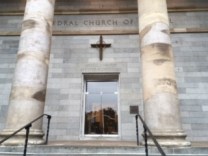
St Paul cathedral EpiscopalI continued to walk up Bromfield St., towards Tremont St., which forms one border of the Boston Common.  My intention was to visit the Episcopal St. Paul Cathedral.  The church was established in 1819, as an Episcopalian parish.  In 1912, St. Paul’s was designated as the Cathedral Church of the Episcopal Diocese of Massachusetts.  When I worked in the Downtown, I would visit St. Paul’s on a regular basis; I found the quiet interior to be conducive to meditation.  Back then, it still had, what I would call, cubicle seating.  The pews arrangedInterior St Paul and separated by stalls.  I had heard that the cathedral church was going to be renovated, and I wanted to see the result.  When I entered the main church, I was stunned!  Gone were the pews, the memorial plaques on the walls, the altar rail.  It was wide open space, with stackable, plain chairs arranged for some service.  The interior was flooded with natural light, streaming from the skylights above.  And in the center, was a labyrinth.  Music flooded the church, as an organist was playing at the organ in the chancel of the Cathedral.  I still had a very peaceful experience during my time there.
I left the Cathedral and made my way to the Shrine, to attend the 12:00 Noon Mass, with the rest of the fraternity. I had forgotten that this Mass was going to be a special one, because we were St. Anthony Shrine 2017celebrating a Profession. A young man, Bobby Hillis, was going to profess his intention to live the Gospel life, in the spirit of St. Francis of Assisi, by following the Rule of the Secular Franciscan Order. For about a year and half, he has been in formation, learning what it means to be a Franciscan; in his personal life; his life in the Church; his life in the world. After the homily, before the Franciscan priest, who was our celebrant, and our fraternity Minister, and the whole Fraternity, he declared:

I, Bobby Hillis, by the grace of God, renew my baptismal promises and consecrate myself to the service of his Kingdom. Therefore, in my secular state I promise to live all the days of my life the Gospel of our Lord Jesus Christ in the Secular Franciscan Order by observing its rule of life. May the grace of the Holy Spirit, the intercession of the Blessed Virgin Mary and our holy father St. Francis, and the fraternal bonds of community always be my help, so that I may reach the goal of perfect Christian love.
[Ritual of the Secular Franciscan Order, pp. 23 & 24.]

After the Profession Mass, we all gathered in the Shrine’s auditorium for a celebratory luncheon. For anytime a new member is professed, it “is a cause of great joy and hope for all the members of the community and for the whole Church.” (Ritual, p. 24)

SFO Profession 1 102017

SFO Profession 2 2017


So that was my trip into downtown Boston; now the coffee cups have to go into the dishwasher rack. Hope to see you again next week.


Weekend Coffee Share – 8/13/2017

Over a cup of coffee, I would share with you how upset I have been over the events in Charlottesville, VA.  I had hope that we had outgrown the white supremacist movement; and the racism and hatred it generates.  But, that appears not to be happening.  We know we must confront it, but we need to realize we cannot use the same tactics.  We, as a nation, are better than the racists in our midst.

Over a cup of coffee, I would share that earlier last week, my wife and I were still on Cape Cod, MA, with members of her family.  While there, we paid a visit to Provincetown, located on the northern tip of the Cape.  Let us say, it is one of most unique communities in the Commonwealth, maybe in the country.  When you walk through the town streets, you are in the midst of a diverse crowds of people. It can be a very interesting time.

Over a cup of coffee, I would share that I have increased the number of books I have read.  Trying to spend more time with a book in my hands, rather than an IPhone.

Yesterday, I attended a meeting of my Secular Franciscan fraternity.  It has been awhile, but I needed to get back in touch with my Franciscan spiritual roots.  The Secular Franciscan Order is a lay branch of the Franciscan Movement.  It was good to  see old friends again.  

Well, the cups are in the dishwasher rack.  I will see you again next week.

Reflecting Again on Why I Write.

Writing

Writing

Why do I write?  That is a very interesting question today, especially since I have been finding it to sit in front of a keyboard, or to pick up a pen.  It was not too long ago, that I would be posting on my blog every other day, if not every day.  I have a serious case of writer’s block, which is why I am trying out Writing 101.

Why do I want to write?  Because sometimes I feel have something to share with the rest of the world.  As a Christian Catholic, a Secular Franciscan, and a Deacon, I feel the need to share my experiences of my encounters with God through Scripture, the Eucharist, prayer, and life.  I want to share the Good News of Jesus Christ with a world that more skeptical, that is a little darker, more violent, and where the poor and powerless have no voice.  I want share the Good News with those who are struggling with the challenges of everyday life; by sharing my own struggles with living the faith daily.

I want to write about, and express my belief that the Catholic Church, this community of believers, is still relevant for our society today.  While not turning a blind eye to its sins and failings, to express the joys, comfort, and inspirations I have experienced for myself.  And I want to share my opinions with a voice that accepts others, whether they agree with me or not.

When I write, I hope I am becoming, like St. Francis of Assisi, a Herald of the Great King, Jesus Christ!

From a Franciscan Perspective – Blessed Frederic Ozanam and Care for the Poor

“1) Secular Franciscans should always act as a leaven in the environment in which they live through the witness of their fraternal love and clear Christian motivations.

2) In the spirit of minority, they should opt for relationships which give preference to the poor and to those on the fringe of society, whether these be individuals or categories of persons or an entire people;  they should collaborate in overcoming the exclusion of others and those forms of poverty that are the fruit of inefficiency and injustice.”  (Article 19, General Constitutions, Secular Franciscan Order)

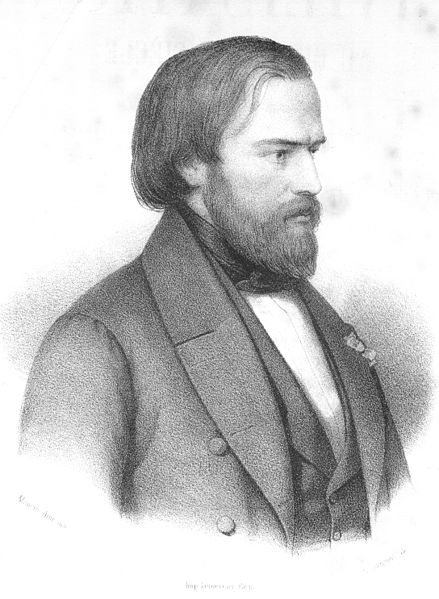
Gravure d'Antoine Maurin dit "Maurin l'aîné" (1793-1860) à partir d'un dessin de Louis Janmot (1814-1892)

Blessed Frederic Ozanam

On August 4th, the Catholic Church remembers and celebrates the life of Blessed Frederic Ozanam.  Born in France in 1813, he originally wanted to become a writer, but his father insisted that he become a lawyer.  In 1831, he went to the University of Sorbonne, in Paris, to study law.  While there, he noticed that the Catholic Church was being attacked by the intellectuals in Paris.  A devoted Catholic, he and some friends started a debate club, where they could discuss issues of faith with agnostics and atheists.  At one of these debates, Ozanam was challenged to prove his faith with actions, and not just talk.  Taking up the challenge, Frederic and a friend began visiting the poor in the slums of Paris, and providing whatever assistance they could.  Their approach was novel, instead of just giving money to some religious or church organizations; they went out and personally met the poor in their homes.  Other laypersons were attracted to work Ozanam was doing, and together they formed the Saint Vincent de Paul Society.  Frederic did earn a law degree, but would eventually also earn a doctorate in literature.  He married in 1841, and he and his wife had a daughter.  He continued his work with the Society.  Continuously suffering from poor health, he died in 1853.  Some time before his death, he supposedly joined the Third Order of Saint Francis; today known as the Secular Franciscan Order.  The Saint Vincent de Paul Society has grown into a worldwide organization, with local conferences based in most parishes.  They continue their work of personally visiting and providing assistance to the poor in their local communities.

There have been some negative comments about Pope Francis’ focus on the poor.  Some feel that he is neglecting the middle class, who are also suffering from a decrease in wages, the threat of foreclosure on their homes, and a loss of a sense of security that their parents had.  As an out of work member of the middle class, with shrinking resources; I understand the feeling of anxiety, uncertainty and fear people are experiencing.  I am experiencing that to.  But Jesus, through his Gospel, has told us that we are called to take up our crosses daily, and follow him.  And to follow Jesus means to proclaim the Good News to the poor, to heal the sick, to care for the widow and orphans, feed the hungry and to set free the imprisoned.  Even with our own anxieties and sufferings, we are still called to encounter the poor among us, and offer help.  We can accomplish this through God’s grace, and being open to the influence of the Holy Spirit.

Through Jesus Christ, God is with us, in good times and the difficult times.  Let us be open to that Presence, and open to sharing that gift with others.

A Franciscan’s Perspective: Blessed Ramon Lull, His Life and the Takeaway.

Blessed Ramon Lull“Therefore, any brother who, by divine inspiration, desires to go among the Saracens and other unbelievers should go with the permission of his minister and servant…As for the brothers who go, they can live spiritually among [the Saracens and nonbelievers] in two ways.  One way is not to engage in arguments or disputes, but to be subject to every human creature for God’s sake (1 Pet 2:13) and to acknowledge that they are Christians.  Another way is to proclaim the word of God when they see that it pleases the Lord, so that they believe in the all-powerful God-Father, Son, and Holy Spirit-the Creator of all, in the Son Who is the Redeemer and Savior, and that they be baptized and become Christians; because whoever has not been born again of water and the Holy Spirit cannot enter into the Kingdom of God (cf. Jn 3:5).  (The Early Rule of the Order Friars Minor; Chap XVI: 2-3, 5-7)The

Today, June 30th, the Catholic Church remembers Blessed Ramon Lull, who was a member of the Secular Franciscan Order.  He was born in 1232 AD, on the island of Majorca.  He was extremely well-educated and served in various royal courts on the Iberian Peninsula.  After listening to a sermon that touched his heart, he earnestly strived to live the Gospel life as a Secular Franciscan.  He promoted missionary work among the peoples of North Africa; working to establish mission colleges, where missionaries could learn Arabic.  He firmly believed that the way to bring non-believers to Christ was not with the sword, but through prayer and dialogue.  He took time away from his college building efforts, and lived the life of a hermit for nine years.  During this time, he produced a substantial amount of spiritual and philosophical works.  In 1314, at age seventy-nine, he went to North Africa, to be a missionary himself.  There he encountered a mob of hostile Muslims, who stoned him, and mortally injured him.  Some merchants were able to get him on a ship bound for Europe.  He did in 1315.

Francis of Assisi once described himself as a herald of the Great King, Jesus Christ.  He encouraged his brother friars to go out and preach about the love of God, to all they came in contact with, believer and non-believer alike.  But he also wanted their words to be backed up by their actions; by their works of charity, and showing respect to all they came in contact with.  In the first draft of the Order’s Rule (Regula Non Bullata), he describes the two ways his friars were to evangelize, by way of life, or open proclamation of the Gospel of Jesus Christ.

The Catholic Church, and especially the Church here in the Archdiocese of Boston, are being called to engage in a New Evangelization.  One way of evangelization is live our lives as believers of the Good News; as those who have a relationship with God through Jesus Christ.  This relationship should color how we interact with others, in our families, our workplaces, and in the marketplace.  The other is to never be shy about sharing what our personal encounter with Christ has meant for us; what it has changed in us.  We share our struggles with our faith; we share the joys of our faith.  And we have the courage to invent others to come and see.

Evangelization is something God is calling us to be involved in, in our world today; right now, right here.  We are all called to be heralds of the Great King!

Laudato Si’ is Out; And it is Shaking Things Up!

Laudato Si 2On June 18th, the Vatican officially released Pope Francis’ encyclical on the environment:  “Laudato Si’.”  Truth be told, I have not actually read the document myself; I am basing my own observations on the analysis and commentary of others, whose opinions I trust.  Chief among them is John Allen, Jr. of Crux who has done some analysis on the encyclical.

The theological analysis of the document I have; comes from Father Dan Horan OFM, of Dating God, who gives a Franciscan perspective on the encyclical.  The other comes from Jay Michaelson, of Religion News Service.  He brings out some of the theological points in the document that he considers truly radical.

As a Franciscan, the theological points that grabbed my attention were found in Chapter 2: “Human life is grounded in three fundamental and closely intertwined relationships: with God, with our neighbors, and with the earth itself.”  And in Chapter 3: “Our ‘dominion’ over the universe should be understood more properly in the sense of responsible stewardship.”  To Western ears these statements may seem very strange, but they are not new.  If one was to get beyond the image of St. Francis of Assisi as a statue holding a birdbath, one can see a Francis who knew that because of his intimate relationship with God, he had to have an intimate relationship with all people, and all creation.  Joined intimately with Christ, through the Gospels, through the Eucharist, and prayer, he was fully open to, and accepted the reality that he shared a kinship with all people, with all creatures, with everything that exists.

Francis passed this realization on to his followers, through his words and his actions.  Sadly, some of his children did not realize the depth of his teaching, but in recent times, we are finally beginning to get the point.  In our Secular Franciscan Rule, we have Article 18: “Moreover they should respect all creatures, animate and inanimate, which bear the imprint of the Most High, and they should strive to move from the temptation of exploiting creation to the Franciscan concept of universal kinship.”

It is this idea of “universal kinship” that Pope Francis is calling on the world, on all of us, to realize, and to act on.  It is a call to change our way of life, that is abusing our earth, and live in ways that will enhance our planet.

I do plan to read this encyclical myself, and hopefully I will be able share my own insights with you soon.  Pace e Bene!

I Want to Fly to Assisi

Where would I go if could be immediately transported somewhere?  I and other bloggers were challenged to write a post, answering this question.

I would like to be soaring over the green Umbrian countryside of Italy, like a brown sparrow, heading towards the small Italian city of Assisi.  It is an ancient city; most of the buildings were built during the Middle Ages, still being occupied.  I am heading towards a large Catholic Basilica, the Basilica of San Francesco d’Assisi, the last resting place of Saint Francis of Assisi.

Saint Francis was born Giovanni di Pietro di Bernardone, the son of a wealthy cloth merchant.  His father, who made his money selling fine cloth to French merchants, nicknamed his son Francesco as a tribute to the French.  Francis was the city playboy; it was not a party if Francis was not invited.  He was a social climber, who longed to belong to the nobility, to become a knight.  He was a soldier, a prisoner of war, a veteran who was broken in body and soul.  And because of his brokenness, Jesus Christ entered into Francis’ heart; and Francis experienced a conversion, a conversion to the Gospel life.  He began to give his money to any poor person who asked for alms.  He went among the lepers, caring for them, washing their sores, and binding them with bandages.  In the solitude of caves, he began to develop a deep spiritual, prayer life.  He reflected on the gospels, he entered into an intimate relationship with God.  Francis strived to live the Gospel of Jesus Christ.

He gave away everything he owned, dressed like a beggar, in a grey, brownish robe.  He went about serving the poor, preaching in the streets, and marketplaces; proclaiming to all who would listen to him; that God loved them all.  Men, who heard his words, saw his lifestyle, were drawn to Francis, and soon he had twelve followers.  Twelve became a hundred; the hundred became thousands, all promising to live the Gospel of Jesus Christ, according to the example of Saint Francis.  They became the Order of Lesser Brothers, Order Friars Minor.  Women, like Clare of Assisi, were also drawn to this Troubadour of Christ.  With Clare, he formed a contemplative community of women, the Poor Ladies of Assisi, now known as the Poor Clares.  There were other men and women, farmers and tradesmen, wives and seamstresses, who also wanted to live the Gospel, and sought Francis’ guidance.  They became the Brothers and Sisters of Penance, the Third Order of St. Francis; today known as the Secular Franciscan Order.

I became attracted to St. Francis during my third and last year at the archdiocesan seminary.  I had decided to take years’ leave from the seminary; I spent the year with a Christian ecumenical organization which provided worship services in the National Parks.  I was sent to Yellowstone NP, lead services during the weekend, worked in the kitchen the rest of the time.  And in the midst of all that natural beauty, I read about Francis and the Franciscan life.  After two years, I entered formation to become a Friar.  I was to realize that God had another path for me, so I left the Friars, but the Franciscan spirit was already embedded in my heart.  I would later join the Secular Franciscan Order; I have been a professed member for over 25 years.  And I am always wishing I had the means to make a pilgrimage to Assisi, to visit that Basilica.

Francis died on the evening of October 3, 1226, at the age of 44 years old.  He was canonized a saint in 1228.  The friars were already beginning the construction of the Basilica.  The best architects, artisans and artists, the pioneers of the Italian Renaissance, were brought onto the project.  The Basilica was constructed in two levels, the upper church with vaulted ceilings, and large stain glass windows.  The lower church is more enclosed, but both levels are covered with beautiful frescoes, painted by Italian master artists.  The Basilica is considered an international treasure.  However, when the Basilica was finished; the Friars buried Francis in secret; for fear that rival cities would try to steal the remains.  They did such a good job hiding the burial site, that Francis’ body was lost until 1819.  When the burial site was rediscovered, a new crypt was constructed under the lower church.  The crypt has a small chapel, with an altar.  Above the altar is a stone coffin, containing the bones of St. Francis.  It is bound with iron straps, and an iron grill over the entrance.  The walls of the crypt are bare stone, simple, unadorned.  It is there I wish I could sit, contemplating, in the dim light, the last resting place of a man who continues to inspire Christians and non-Christians.  And in the stillness of that place, maybe I can hear a whisper, wishing me and all who come there: “Pace e Bene!”  “Peace and Good!”

Basilica of Saint Francis lower Church Tomb of St Francis Upper Church

Let Me Introduce Myself….Again!

Photo 2

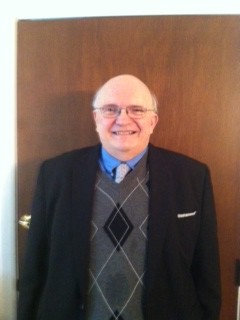
Greetings!  My name is Jonathan Jones.  I am a married Roman Catholic, a Secular Franciscan, and a Permanent Deacon.  I am writing this blog, because as St. Francis of Assisi is believed to have tell his followers, “preach often, and if necessary, use words.”  But as Francis preached from his own experiences of a loving God, I hope to share my own spiritual experiences with you.  I am also a child of Vatican II; I grew up during the Council, was educated by nuns and priests influenced by the Council, and believe firmly in the teachings that came out of the Second Vatican Council.  So my view of the world and the Catholic Church are colored by that experience, and I wish to share those views.  I have also been influenced by many spiritual fathers and mothers, living and dead.  These include my parents, Franciscans, religious and lay, among them: Francis and Clare of Assisi, St. Anthony of Padua, St. Bonaventure, and Angela of Foligno.  Others include: Dorothy Day, Thomas Merton, St. John XXIII,  and Henri Nouwen.

My life experience has been varied, unique and interesting.  I have been a diocesan seminarian, and a Franciscan novice.  I have worked in the mutual fund industry for almost 33 years and have recently been laid off, and looking for work.  I am married to a wonderful woman, whose name is Peg, for a little over 26 years, who has been very loving, and very, very patient with me!

So all this I bring to the table, as I view my Church, my state, my nation, and my world.  I wish to share my views with you, and hope you will share yours with me.  Pax et Bonum!

Thomas Merton, 100th Birthday of a Trappst Monk…And a Secular Franciscan?

Merton

Today, January 31, 2015, would have been the 100th birthday of Father Louis Merton, OSCO; better known to the world as Thomas Merton. The Catholic, Christian blogosphere is abuzz with reports, stories, and reflections on the life of this Trappist monk, one I read on Crux, by Dennis Sadowski, of the Catholic News Service; another by Margery Eagan, On Spirituality columnist for Crux, and finally a very moving post by Father Dan Horan, OFM on his blog.

I do not know how many will share this opinion, but I think of Thomas Merton, as the one person who brought Christian spirituality, especially contemplative spirituality to the modern American Catholic population. After him, I think we see an increase in the number of books on spirituality, and prayer, geared for the Catholic laity, and new authors, like Thomas Keating, M. Basil Pennington, Richard Rohr, and Emilie Griffin. I know for myself, my spiritual life became much deeper, more enriched by reading his writings. He showed me a path to walk, and encouraged me to seek out other spiritual fathers and mothers, for inspiration and guidance.

I am still discovering new things about Merton, especially as heretofore unpublished journals, books, and essays are becoming public. This has given a much more rounded view of Merton, his life, his struggles, and his achievements. Now there are some facts that I was not aware of until I recently read Father Dan Horan, OFM book on Merton, was that Thomas Merton had some deep Franciscan roots. After his conversion to Catholicism, he felt a call to the Order of Friars Minor, and had applied to the Order, and was initially approved to enter into formation as a friar. Before he was to enter, something happened; scholars are not completely sure what, that caused Merton to withdraw his application. Still attracted to Franciscanism, he found himself at the Franciscan university, St. Bonaventure’s, in western New York. There, he joined the faculty as an instructor in English. It was during his time there, that he became a member of the Third Order of St. Francis, now known as the Secular Franciscan Order. This bit of information floored me. Now I knew that Merton had a Franciscan connection. When I was once a Franciscan novice myself, and attended some summer classes at St. Bonaventure’s, I daily would look up at a hillside clearing, known as “Merton’s Heart.” But to learn that Merton had been a Secular Franciscan, “Wow!”

Of course, this brings a whole bunch of questions: what fraternity did he belong to? Is the fraternity still in existence? Is the fraternity’s register, with his name listed in it, still available? Did he attend monthly fraternity meetings, or was he an isolated tertiary, attached to a fraternity, but unable to make the meetings? Maybe someday, some scholar, maybe even a Secular Franciscan, will be able to find answer to these questions.

I owe a debt of thanks to Father Louis, for prodding me to go ever deeper into my relationship with God. May he rest in peace!

Loring Crossman – Rest In Peace Brother

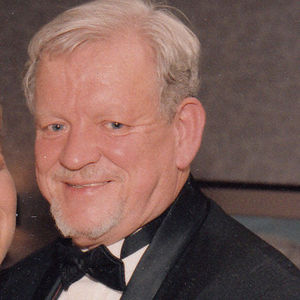
Loring Crossman, OFS

Loring Crossman, OFS

Last week I lost a friend, Loring Crossman, a fellow Secular Franciscan.  I was asked the day before his funeral, to give a brief eulogy for him.  I had no notes when I gave it, but to the best of my memory, here is what I said.

“Loring Crossman was my brother.  Through Baptism, we were brothers in Christ.  We were also brothers in Saint Francis of Assisi.  Loring was a person committed to ’ living the Gospel of Jesus Christ, in the spirit of Saint Francis of Assisi’  He succeeded me as Minister of our fraternity, and he lead the fraternity as we strived to adapt our lives to the new Rule of Life, that came out of Vatican II.  Like St. Francis, he led us with gentleness and compassion.  I only saw him lose his temper once, and that was at me over something I had failed to do.  Like St. Francis, he was generous with his time, talents, and treasure.  And like St. Francis, he had fraternity members who would provide comic relief.  I remember that once at the anniversary of our new Rule, St Bonaventure University, in New York, was sponsoring a seminar on the SFO Rule.  I drove there myself; Loring, Edwina and two other members were traveling together.  They had to pick up one member in Connecticut, because she was spending some time at the casinos!

Like St. Francis, Loring suffered from many illnesses.  In Francis’ final months, he spent some time with St. Clare and the Poor Ladies of Assisi, at San Daminao monastery.  Francis stayed in a small hut on the monastery grounds.  He was suffering from blindness, stomach problems and other illnesses.  And his hut was being overrun by mice and other critters, which allowed him no rest.  Yet, in all that suffering, Francis was able to compose a most beautiful hymn, the first poem in the Italian language, “The Canticle to Brother Sun.”  It was Francis way of praising God, despite all his suffering.  And I am sure that Loring, despite everything he was going through, was able to continue praising God, to trust in His love.  Loring was able to say, with all his heart, ‘Welcome Sister Death, I am going home to the Father.’’