Mourning For Those Lost; Praying For The Injured!

canadian flag half mast

We are all shocked by the events in Toronto, Canada, last Sunday evening, where fifteen individuals were shot, with two fatalities.

To our Canadian brothers and sisters, we send our prayers.

You saints of Canada, please hear us and intercede for us!

Saints Jean de Brebeuf and Issac Jogues, please pray for those who died.  May they be in the Father’s embrace.

Saint Marguerite d’Youville, please pray for the injured.  May they experience the healing touch of the Son.

Saint Andre Bessette, CSC, and Blessed Frederic Janssone, OFM, pray for  the citizens of Toronto, and all of Canada.  May they all receive comfort from the Holy Spirit.

Saints of Canada, hear us!


“Praised be You, my Lord…”

“Most High, all-powerful, good Lord, Yours are the praises, the glory, the honor, and all blessing.

To you alone, Most High, do they belong, and no man is worthy to mention Your name….

Praised be You, my Lord, through our Sister Mother Earth, who sustains and governs us, and who produces varied fruits with colored flowers and herbs…

Praise and bless my Lord and give Him thanks and serve Him with great humility.    

(The Canticle of Brother Sun, by St. Francis of Assisi; Verses1, 2, 9, 14)

Honor The Fallen

Outside my office building in the South Shore, the company lowered the American flag to half staff. It honors the memory Sargent Michael Chesna, a Weymouth, MA police officer, who died in the line of duty. Many of us, in the face of violence or disaster, will run for cover. Extraordinary men and women, like Sargent Chesna, with the duty of protecting us, will charge forward. Sadly, some do not return.

We remember their courage, we pray for, and support their loved ones that are left behind. And we also must remember the victims. In this incident, we pray for Vera Adams, shot in her sun room.

Eternal rest grant to them, O Lord, and let perpetual light shine upon them!

Through the mercy of God, may they Rest In Peace!

“So They Went Off And Preached Repentance” – 15th Sunday In Ordinary Time

Jesus sends out the TwelveAmos 7: 12-15

Ephesians 1: 3-14

Mark 6: 7-13

“Jesus summoned the Twelve, and began to send them out two by two and gave them authority over unclean spirits.”  (Mark 6: 7)

So began a different role for the followers of Jesus of Nazareth.  He sent them out to proclaim that a new day was dawning.  They went throughout the countryside, calling people to repent, to prepare for the coming of the Kingdom of God.  And they healed the sick, and freed many from the demons that possessed them; signs that the power of God was at work in the land.

In today’s Church, we need to recognize that Jesus Christ is calling us to likewise be proclaimers of the Good News. By our words, by our actions, by the example of our very lives; we reveal the love of God at work in our world. When we share how God has healed us, comforted us, guided us along the right path; we proclaim his goodness. When others witness how we care for friend and stranger alike; they see the love of God at work in the world.

This requires that we be continually open to the love of God ourselves. We must continually seek his guidance, his help, especially during times we falter. We are at our best as evangelizers, when we show our struggles, as well as our successes.

So we go forward, as spreaders of the Good News of Jesus Christ. May we bring back a bountiful harvest.

NEW ORLEANS — The 18,000 deacons in the United States exercise a ministry of presence, bringing the healing and hope-filled message of Jesus Christ to people they encounter daily in their parishes, other ministries and workplaces. That diaconal ministry of presence will be front and center July 22-26 in New Orleans. About 2,800 people —…

via Deacons’ ministry of presence will be in forefront at upcoming congress — Crux

Saint Benedict, Happy Feast Day!

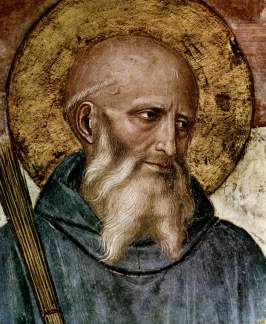
Benedict of NursiaOn July 11th, the Catholic Church; and other Western Christian Churches, remembered and celebrated the life and work of St. Benedict of Nursia. It is believed that he was born around 480 AD. Not much is known about his life. The only biography we have, was written 50 years after his death. Born into a wealthy family, he decided to seek a deeper relationship with God. He became a hermit, loosely attached to a monastic community, in the Italian mountains. Later, as his reputation for holiness grew, he would establish many monastic communities. He is most well known for his monastic Rule.

Many early Christian monasteries were being guided and governed by a rule of life. But, there was something about the Rule of St. Benedict that appealed to those seeking to live a holy life in Christ. Benedict sought to create a balanced life of prayer and work; solitude and community for his followers. It was structured, yet open to the promptings of the Spirit. Benedict goal was to create a community, where the monks could encounter the Christ, the Son of God.  Because of this, many communities of monks and nuns were founded throughout Europe; governed by this Rule.  St. Benedict is considered the founder of Western Christian Monasticism.

His words continue to inspire and guide religious and laypersons, who wish to draw closer to God.

“Listen, O my son, to the precepts of thy master, and incline the ear of thy heart, and cheerfully receive and faithfully execute the admonitions of thy loving Father, that by the toil of obedience thou mayest return to Him from whom by the sloth of disobedience thou hast gone away.

To thee, therefore, my speech is now directed, who, giving up thine own will, takest up the strong and most excellent arms of obedience, to do battle for Christ the Lord, the true King.

In the first place, beg of Him by most earnest prayer, that He perfect whatever good thou dost begin, in order that He who hath been pleased to count us in the number of His children, need never be grieved at our evil deeds. For we ought at all times so to serve Him with the good things which He hath given us, that He may not, like an angry father, disinherit his children, nor, like a dread lord, enraged at our evil deeds, hand us over to everlasting punishment as most wicked servants, who would not follow Him to glory.

Let us then rise at length, since the Scripture arouseth us, saying: “It is now the hour for us to rise from sleep” (Rom 13:11); and having opened our eyes to the deifying light, let us hear with awestruck ears what the divine voice, crying out daily, doth admonish us, saying: “Today, if you shall hear his voice, harden not your hearts” (Ps 94[95]:8). And again: “He that hath ears to hear let him hear what the Spirit saith to the churches” (Rev 2:7). And what doth He say? — “Come, children, hearken unto me, I will teach you the fear of the Lord” (Ps 33[34]:12). “Run whilst you have the light of life, that the darkness of death overtake you not” (Jn 12:35).

And the Lord seeking His workman in the multitude of the people, to whom He proclaimeth these words, saith again: “Who is the man that desireth life and loveth to see good days” (Ps 33[34]:13)? If hearing this thou answerest, “I am he,” God saith to thee: “If thou wilt have true and everlasting life, keep thy tongue from evil, and thy lips from speaking guile; turn away from evil and do good; seek after peace and pursue it” (Ps 33[34]:14-15). And when you shall have done these things, my eyes shall be upon you, and my ears unto your prayers. And before you shall call upon me I will say: “Behold, I am here” (Is 58:9).

What, dearest brethren, can be sweeter to us than this voice of the Lord inviting us? See, in His loving kindness, the Lord showeth us the way of life. Therefore, having our loins girt with faith and the performance of good works, let us walk His ways under the guidance of the Gospel, that we may be found worthy of seeing Him who hath called us to His kingdom (cf 1 Thes 2:12).

Preamble of the Rule of St. Benedict

Source of Life

In the Scriptures for this past Sunday, we read from the Book of Wisdom, that God creates life, only life. He meant for humanity to be immortal. It is only because humanity allowed evil into its hearts, that death came in.

In the reading from the Gospel of Mark; we see Jesus as the source of healing and life. A woman needed only to touch his cloak, and she was healed of her illness. Jesus restores a little child to life. And he will, by his death and resurrection, will free all from the power of death.

But death can take many forms. There is physical death, and then is the slow death of one’s spirit, one’s soul. Sometimes, the harsh circumstances of life can grind us down. So much so, that we begin to to feel dead inside to the beauty of creation; the love of others; the love of God.

It is in moments like this, that we need to turn to Jesus, through Word and Sacrament; through prayer and meditation. In encountering Jesus Christ, we encounter the healer, both of body and soul. Now this does may not mean an instantaneous healing. But if we remain open to the Spirit of Christ, working within us; we may feel a little more peace, a little more hope. And a new dawn will break open for us.

Walls

Thoughts I had walking to the train station.

Blog 0629If you build walls, physical, ideological, monetary; you can lose empathy for those on the other side. When you build gated communities, physically or by zoning, you can lose empathy for those who cannot get in. When you build a wall of social media around yourself, that only gives you what you want to see, hear and read; you might lose empathy for those who might have a different opinion.

A lack of empathy, can lead to lack of respect for the other as a human person. Lack of respect can lead to an unwillingness to discuss, debate, and perhaps find understanding, and common ground. An unwillingness to at least talk, can lead to anger and hatred.

We are approaching the anniversary of the birth of the republic, yet there are some who are talking about a second Civil War brewing. In respect for those who who sacrificed their fortunes, their lives for the concept of “We, the People of these United States,” we need to find the courage to break down these walls; reach out and shake the hand of our fellow citizens.

May the God, who broke down the walls of Jericho, help us break down the walls we have built around us.  May the Father who broke open the tomb of Jesus Christ on Easter morn,  break open our hearts to the needs of others.  May he help us reach out to others, and recognize that we are all brothers and sisters, with the same Father.

May God bless, and inspire the people of these United States of America!

Tough Love!

Love thy neighbor untitledThere has been a school of thought that when raising our children, we need to be strict, uncompromising about standards of behavior. This “tough love” school was particularly popular some years ago. And among many parents, it still is.

I want to talk about another type of “tough” love. The type of love that Jesus calls us to have for one another. I have been deeply troubled by what has been going on both politically and socially in our nation. Racism is raising it’s ugly head. Splits between poor and rich; blue collar and white collar; liberal and conservative, are becoming more fractious and angry.

This is not completely a new thing, one needs only read about the life and incidents that occurred leading up to the Civil War. In 1854, abolitionist Senator Charles Sumner was beaten by a Southern Congressman, on the floor of the Senate Chamber itself. Fast forward, we have a Democratic Congresswoman calling for the harassment of any supporter of President Trump. And his supporters are doing the same to anyone who opposes his policies. And the social media of both sides are egging their followers on. And the country appears to be fracturing.

Jesus taught that there are two prime commandments from which all other commandments come from: You shall love your God with all your heart, with all your soul, with all your mind. And the second commandment: You shall love your neighbor as yourself. This is the “tough” love I am speaking about. A love we experience when we open our hearts, our inner selves to God. A love that asks us to change, but also to accept who we are at that moment. And if we can accept ourselves because God does; so must we accept other persons, because God loves them too. They are due at the least respect; even if they do not offer it in return. We can never dehumanize another, turning them into an object of our anger.

Now that does not mean we just standby and remain silent. We are still called to the prophetic role of speaking truth to power. We speak out against those who spread bigotry and hatred of others. But we do not use their own tactics. Look tothe work of Martin Luther King Jr., and Dorothy Day, their movements used protests, and civil disobedience; but using non-violence, in word and action, to win people to their side.

So we are challenged by the Spirit, to be faithful to the commandment to love our neighbors; even when they are being asses. Gospel love is “tough” love.

Nativity of St. John the Baptist – June 24th

Nativity of John the BaptistIsaiah 49: 1-6

Acts 13: 22-26

Luke 1: 57-66, 80


“In those days, Paul said:

‘John heralded his coming by proclaiming a baptism of repentance to all the people of Israel; and as John was completing his course, he would say, ‘What do you suppose that I am?  I am not he.  Behold, one is coming after me; I am not worthy to unfasten the sandals of his feet.’

‘My brothers, children of the family of Abraham, and those others among you who are God-fearing, to us this word of salvation has been sent.'” (Acts 13)

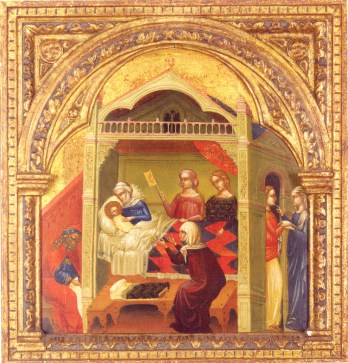
On this day, Catholics, and Eastern Rite Christians celebrate the Nativity of St. John the Baptist.  We remember the birth of St. John, we remember what his role in salvation history was.  There are theologians who describe him as the bridge between the Old Testament times and the New Testament times.  He is considered the last prophet of the Prophetic Age of Israel.

We do not much of his history; we can suspect that he spent time in the desert, fasting and in prayer.  Some scholars theorize that John may have had contact with the Essenes a Jewish ascetic community.  At some point, the Holy Spirit called him from the desert to the Jordan River, where he began to proclaim the coming of the Messiah, and the Kingdom of God.  He called the people to a life of repentance, symbolized by them receiving baptism in the waters of the river.  It was on the Jordan River, that he encountered the promised Messiah, Jesus of Nazareth.  And though he felt unworthy, he baptized Jesus, so that all things would be fulfilled.  After this meeting, John continued preaching and baptizing.  He would call out Herod Antipas, ruler of Galilee, about his lifestyle, and especially his marriage to his brother’s former wife, which violated Jewish law.  St. John would pay with his life for being so outspoken.

When we were baptized, we became members of the Body of Christ; as such, we share in his life as priest, prophet, and king.  Focusing on our prophetic role; we are called to proclaim the Good News, either by our words or actions.  As prophets, we are to speak up for the poor, the persecuted, and the refugee; and speak truth to power.  As St. John the Baptist was moved by the Holy Spirit, so we also be open to the promptings of the Spirit, and be true prophets to our world.