Weekend Coffee Share 07/10/16

deacon coffee mugIf we were having coffee, I would tell you how sadden I have been about the news of the police shootings and killing of two black men, and then the shootings  of 11 police officers in Dallas, TX; resulting in deaths of five officers.  There is an air of unease in the country right now; the black communities distrust and fear their police forces; the police feel threatened by the very people they have sworn to protect and serve.  And there are politicians, who with their rhetoric are fanning the flames.  Communities are becoming divided, hunkering down in their own enclaves, with no interest in dialogue.

It seems ironic that at Catholic Masses celebrated throughout this country, the Gospel proclaimed included these words:

“You shall love the Lord, your God,

with all your heart,

with all your being,

with all your strength,

and with all your mind,

and your neighbor as yourself” (Luke 10: 25-24)

The Gospel call is to see all people as our neighbors, to respect and to love them.  And to talk with each other, and find common ground to reduce the stresses that threaten to tear this republic apart; whose 240th anniversary we have just celebrated.

If we were having coffee, I would tell you that my wife and I joined my siblings, and a cousin and his family at a cabin in Maine, which my aunt owns.  It is on Lake Sokokis, in Limerick ME.  It was too cool for swimming, but we did have a wonderful cookout.

If we were having coffee, I would share with my experience of leading a Sacrament of Baptism catechesis class for new parents who wish to have their infants baptized, and become part of the Catholic Church.  I had five couples in attendance; one couple brought their newborn with them.  The child slept through the class.  I try to help these parents realize that the baptism of their children is not just an encounter with the love of God for the children; but also a special opportunity for them to encounter God, through the Holy Spirit.  I tell them that when the priest will ask what they are asking of the Church, and they reply: “Baptism”; they and their child’s lives will be forever changed.  The baby will experience a rebirth through the baptismal waters; they will have committed themselves to bring the child in the faith.  And not just though placing the child in religious education classes; but by the example of their struggle to live the faith.

Well, my coffee mug is empty; it is almost midnight, and I have a long week to look forward to.  See you all next time over a cup of coffee.


On Retreat – Weekend Coffee Share

Campion Retreat Center 2

Campion Retreat Center

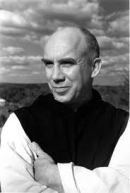
If we were having a cup of coffee, I would tell you that last weekend I was at a retreat for Permanent Deacons of the Archdiocese of Boston.  It was held at the Campion Retreat Center in Weston, MA.  The Center is managed by the Society of Jesus, better known at the Jesuits.  It is also where their retirement home is located.  Our retreat master was a Xaverian Brother by the name of Paul Feeney.  When many of us were in formation, he taught the Old Testament class.  For this retreat, he looked at the lives and spiritualities of Dorothy Day and Thomas Merton; two American Catholics, whose names were mentioned by Pope Francis during his address to the joint session of Congress.  Dorothy Day, a Catholic social activist, was a co-founder of the Catholic Worker Movement.  She practiced every day, the Corporal Works of Mercy, feeding the hungry,

79px-Dorothy_Day_1916

Dorothy Day

comforting those in distress, clothing the naked.  But there was more to it than that, she and her followers strove to change society, to make it a place where it “was easy for people to be good.”  Thomas Merton was a Trappist monk, who wrote a spiritual biography in the 1940’s, that continues inspire people.  He was a prolific writer, and a mystic; combining the two, he produced writings that helped guide many into a deeper spiritual life.  He also wrote on matters of peace and justice, that gave support and spiritual sustenance to many Catholic activists, the late Father Daniel Berrigan, SJ, being one of them.

If we were having a cup of coffee, I would tell you that I had planned on writing about this

Thomas Merton

Thomas Merton

sooner.  I packed the old laptop and brought it with me.  Only to find out that Center does not have WiFi available for retreatants.  Just as well, the weekend was suppose to a time of quiet and reflection, a time of sacred reading and prayer.  And I tried to take advantage of the opportunity handed me.  And it was a spiritually refreshing weekend.

If we were having coffee, I would tell you that while I was waiting at the main entrance to be picked up, a horse came galloping by, followed by a dismounted horsewoman, and some bicyclists.  There was a horse show going on down the road; I guess this big fellah had other ideas.  Fortunately, they caught him before he could be struck by a car, or run over a retired Jesuit, out for his morning constitutional.

If we were having a cup of coffee, I would tell that no matter how great a spiritual experience of a retreat may have been, life is waiting for you when you leave.  I have a book entitled “After the Ecstasy, the Laundry.”  For me, it should read, “After the Ecstasy, Monday morning, the commute, the cubicle!”  The challenge of any retreat experience, is to strive to make what you learn, what you experience, a part of your daily life.  That is something I am still struggling with.

Well, the coffee mug is empty, maybe tomorrow I will bring another steaming mug over.  We will see.

Welcome the Stranger.

 “When an alien resides with you in your land, do not molest him. You shall treat the alien who resides with you no differently than the natives born among you; have the same love for him as for yourself; for you too were once aliens in the land of Egypt.  I, the Lord, am your God. ” (Leviticus 19: 33-34)

TrumpI have used the above quote from Leviticus in a previous quote, but unfortunately, it remains relevant to current events.  And I am speaking about comments made by Republican presidential candidate, Donald Trump, on prohibiting persons of the Muslim faith from entering this country.  And he does not seem to distinguishing between Muslims from a specific geographic location, and all Muslims.  His statement has set off a firestorm of comments, both in the media, and blogosphere!  Many comments were highly critical of Mr. Trump’s opinion, accusing him of violating America’s high ideals.
The sad truth is that since America’s earliest beginning’s, there has been an undercurrent of religious intolerance in the country’s history.  As far back as Puritan Boston, when Quakers were persecuted; even hung, like Mary Dyer, for their beliefs.  Baptists and Evangelicals were discriminated against in the state of Virginia, in the newly born United States.  Mormons were, attacked, murdered, and were driven out to the frontiers of the Republic.  There has always been a subtle discrimination against persons of the Jewish faith.  And Catholics should remember the fierce opposition to believers of our faith existed in this nation.  Some of the early state constitutions had amendments that prohibited persons who “swore allegiance to a foreign ruler (i.e.; the Pope,)” from holding public office.  Catholic schools, orphanages, and convents were attacked at times during urban riots.  When the great waves of Catholic immigrants started coming to our shores, the fear mongering grew to fever pitch.  A nativist party, founded in the 1800’s, and known popularly as the “Know Nothings”; with the aim of preventing immigration of German and Irish Catholics, and limiting the access to the political system only to Protestants.  We have grown as country, and religious liberty is enshrined in both our Constitution, and the body politic.  There have been and always will be tensions as we continue to explore what the ideal of religious liberty and tolerance means in a modern society that has both religious and secular segments to it.

Persons, such as Mr. Trump, are threatening that ideal, by playing to the fears of terrorism that is afflicting our country right now.  Michael Sean Winters, of the National Catholic Reporter, in an interesting recent post on this issue.  In the last few paragraphs, he speaks about the real threat of terror.  The real threat is not the death and destruction terrorists can inflict, but the changes they can cause in a society.  When out of fear, they cause a society, like the U.S., to abandon its ideals of personal freedom, of openness to all faiths, for severe, hard-handed security practices, and make us an armed camp.  When it causes a nation to demonize a whole religion; a whole people, and discriminates against them; then the terrorist wins.

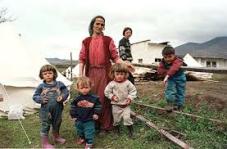
To stand up to terrorism, means to have the courage to remain faithful to those social and political ideals that make us a unique people on the world stage.  As a community of believers, we American Catholics need to remember our own immigrant roots, and not give into fear.  During this Jubilee Year of Mercy, we are called to extend mercy; which we experience ourselves, to others.  We trust that God’s grace will help us overcome fear and anxiety, and we will welcome the stranger.

welcome the stranger

Reflecting Again on Why I Write.

Writing

Writing

Why do I write?  That is a very interesting question today, especially since I have been finding it to sit in front of a keyboard, or to pick up a pen.  It was not too long ago, that I would be posting on my blog every other day, if not every day.  I have a serious case of writer’s block, which is why I am trying out Writing 101.

Why do I want to write?  Because sometimes I feel have something to share with the rest of the world.  As a Christian Catholic, a Secular Franciscan, and a Deacon, I feel the need to share my experiences of my encounters with God through Scripture, the Eucharist, prayer, and life.  I want to share the Good News of Jesus Christ with a world that more skeptical, that is a little darker, more violent, and where the poor and powerless have no voice.  I want share the Good News with those who are struggling with the challenges of everyday life; by sharing my own struggles with living the faith daily.

I want to write about, and express my belief that the Catholic Church, this community of believers, is still relevant for our society today.  While not turning a blind eye to its sins and failings, to express the joys, comfort, and inspirations I have experienced for myself.  And I want to share my opinions with a voice that accepts others, whether they agree with me or not.

When I write, I hope I am becoming, like St. Francis of Assisi, a Herald of the Great King, Jesus Christ!

From a Franciscan Perspective – Blessed Frederic Ozanam and Care for the Poor

“1) Secular Franciscans should always act as a leaven in the environment in which they live through the witness of their fraternal love and clear Christian motivations.

2) In the spirit of minority, they should opt for relationships which give preference to the poor and to those on the fringe of society, whether these be individuals or categories of persons or an entire people;  they should collaborate in overcoming the exclusion of others and those forms of poverty that are the fruit of inefficiency and injustice.”  (Article 19, General Constitutions, Secular Franciscan Order)

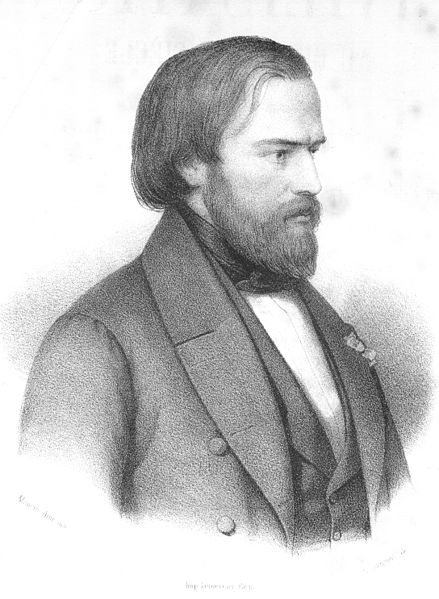
Gravure d'Antoine Maurin dit "Maurin l'aîné" (1793-1860) à partir d'un dessin de Louis Janmot (1814-1892)

Blessed Frederic Ozanam

On August 4th, the Catholic Church remembers and celebrates the life of Blessed Frederic Ozanam.  Born in France in 1813, he originally wanted to become a writer, but his father insisted that he become a lawyer.  In 1831, he went to the University of Sorbonne, in Paris, to study law.  While there, he noticed that the Catholic Church was being attacked by the intellectuals in Paris.  A devoted Catholic, he and some friends started a debate club, where they could discuss issues of faith with agnostics and atheists.  At one of these debates, Ozanam was challenged to prove his faith with actions, and not just talk.  Taking up the challenge, Frederic and a friend began visiting the poor in the slums of Paris, and providing whatever assistance they could.  Their approach was novel, instead of just giving money to some religious or church organizations; they went out and personally met the poor in their homes.  Other laypersons were attracted to work Ozanam was doing, and together they formed the Saint Vincent de Paul Society.  Frederic did earn a law degree, but would eventually also earn a doctorate in literature.  He married in 1841, and he and his wife had a daughter.  He continued his work with the Society.  Continuously suffering from poor health, he died in 1853.  Some time before his death, he supposedly joined the Third Order of Saint Francis; today known as the Secular Franciscan Order.  The Saint Vincent de Paul Society has grown into a worldwide organization, with local conferences based in most parishes.  They continue their work of personally visiting and providing assistance to the poor in their local communities.

There have been some negative comments about Pope Francis’ focus on the poor.  Some feel that he is neglecting the middle class, who are also suffering from a decrease in wages, the threat of foreclosure on their homes, and a loss of a sense of security that their parents had.  As an out of work member of the middle class, with shrinking resources; I understand the feeling of anxiety, uncertainty and fear people are experiencing.  I am experiencing that to.  But Jesus, through his Gospel, has told us that we are called to take up our crosses daily, and follow him.  And to follow Jesus means to proclaim the Good News to the poor, to heal the sick, to care for the widow and orphans, feed the hungry and to set free the imprisoned.  Even with our own anxieties and sufferings, we are still called to encounter the poor among us, and offer help.  We can accomplish this through God’s grace, and being open to the influence of the Holy Spirit.

Through Jesus Christ, God is with us, in good times and the difficult times.  Let us be open to that Presence, and open to sharing that gift with others.

Feast of Saint Ignatius of Loyola

“Take, Lord, and receive all my liberty,

my memory, understanding, my entire will,

all that I have and call my own.

You have given all to me.

To you, Lord, I return it.

Do with it as you will.

Give me only your love and your grace;

That is enough for me.”

(Suscipe, written by St. Ignatius of Loyola)

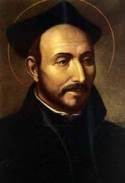
Today, the CIgnatius of Loyolaatholic Church remembers and celebrates the life of Saint Ignatius of Loyola.  He was a Spanish knight from the Basque country.  Wounded in battle, as he recovered in the ancestral castle, he read a book about the life of Jesus Christ.  Reflecting on, meditating on those stories, he had a conversion experience.  Giving up his sword, he became a pilgrim, journeying to the Holy Land.  In the Spanish town of Manresa, he stayed for a period of time, living as a hermit in cave, along a river bank.  It was there that he had a powerful vision; he never described what he experienced.  He later, after mastering Latin, went to the University of Paris to study theology.  Reflecting on his spiritual journey, he wrote the Spiritual Exercises.  He used them to help guide his companions, and others, who were seeking to get closer to God.  He and his companions formed the Society of Jesus, popularly known as the Jesuits.  This congregation, under the guidance of Ignatius, as Superior General, would go out into world, as preachers, spiritual directors, missionaries, and educators.

I think though that among the great gifts from Ignatius to the Church is his Spiritual Exercises.  Hundreds of individuals have followed the Practices, either in 30 day retreats, or over extended periods of times.  They have been guided into a more intimate relationship with God, and discern what God was calling them to do with their lives.  Thanks to Basque former warrior, a priest, and mystic, a new guide has opened up for those seeking the Lord.

One of My Favorite Catholic Bloggers Interviewed

For quite some time now, I have enjoyed reading posts from Mercy Sister Camille D’Arienzo, who writes for the National Catholic Reporter website, NCRonline.org.  She does interviews with various CathDeacon Greg Kendraolics, delving into their faith and spiritual lives.  Today, I discovered that she had interviewed one of my favorite Catholic bloggers, Deacon Greg Kandra.   He is a Permanent Deacon, ordained for the Diocese of Brooklyn, NY.  In 2007, he created “The Deacon’s Bench.”  It currently exists on the Patheos.com website, which has blogs from many faith perspectives.  In the interview, Deacon Kandra shares some of his history, especially his faith life.  And how he began blogging and what being a blogger has meant for him.
I have enjoyed reading his postings, ever since I entered formation for the Diaconate.  He has his finger on the pulse of the Catholic world, the Catholic blogosphere, and the Catholic Diaconate.  I have his posted homilies and commentaries both thought provoking and inspiring.  I really believe that reading his blog placed the seed in my head about maybe blogging myself.  I would recommend “The Deacon’s Bench” to anyone, but especially to my fellow deacons.

Dear Holy Father!

Pope FrancisDear Holy Father:

What are we Catholics are hoping for in the pews?  St. Pope John XXIII declared his reason for calling the Second Vatican Council:  “I want to throw open the windows of the Church so that we can see out and the people can see in.”  Many of us believe that those windows were not opened enough; others hold that after the Council, those windows were shut!  In the stale air of a closed Church the clergy sexual abuse scandal became possible; and the various financial scandals involving the Vatican Bank came about more easily.  Some of the national Churches, the local dioceses; the Spirit was being stifled because of micromanaging from the Vatican Curia.

So when you were elected as our new Pope, it sent a shockwave through the Church.  From the get-go, you showed that you were going to be a very unusual Pontiff; you paid your own hotel bill, you chose not to live in the Apostolic Palace.  You have reached out to Cardinals from outside the Curia to set up a special council to advise you on reforming the bureaucracy.  You have established a commission to deal with the child abuse scandal.  You have begun to clean up the Church’s financial institutions.  You have encouraged the bishops to speak freely at the Synod of the Family, and sought input from the worldwide laity.

So what more are we looking for?  What I am looking is for more concrete action to back up your inspiring words.  I am looking for more bishops to be held accountable for their failure to act in defense of children.  I am looking for the laity to have more of a voice on who is appointed to shepherd us in our dioceses.  And I am looking for all Catholics to have more of a say in how our parishes and dioceses function.  I would like to the national conferences of bishops allowed to have more authority to speak on and to act on issues that concern the Church and country; and not have the Curia always second guessing them.  I would to see theologians have more freedom to” push the envelope,” when examining matters of faith, doctrine, and the world.  And open discussion, transparent disciplinary actions, should they go “off the rails.”

What I am looking for, Holy Father, what I am hoping for, is that the windows of the Church will once again be open wide, let the Spirit blow in, and set the Church on fire for Christ.  And if it scatters again the accumulated dust of ages; if it again shakes the structures of the Church; Holy Father, would that be such a bad thing?

Dear Leader