Feast Day for Saint Clare of Assisi

Saint Clare of Assisi

Chiara (Clare) Offreduccio was born in Assisi, Italy, on July 16, 1194. She belonged to a wealthy Assisi clan, during the time of the High Middle Ages.

At some time in her life, she came in contact with Saint Francis of Assisi, a young man who had encountered Christ, and was moved to turn his life around. The son a wealthy cloth merchant, he gave up his life of wealth and privilege, and dedicated his life to really living the Gospel of Jesus Christ. Francis wandered the streets of Assisi, proclaiming the Good News, and living a very simple life. He began to draw followers from among the young men of Assisi. And he drew the attention of Clare.

In conversations with Francis, she felt a fire being lit within her own soul. She gave up her life of wealth and privilege; dedicated herself to a life of strict poverty and intense prayer. Her life attracted other women and together they formed a community known as “The Order of Poor Ladies.” With help of Francis, Clare drew up their Rule. They would become a monastic Order, inspired by the example of Clare. They lived in simple quarters, next to one of the churches Francis repaired, San Damiano. And Francis, himself, would remain as a source of inspiration and guidance.

Clare lost her teacher and guide on the evening of October 3, 1226. She would live on until August 11, 1253. The community of sisters that survived her, became known as the ‘Poor Clares.”

The Influence of Francis of Assisi

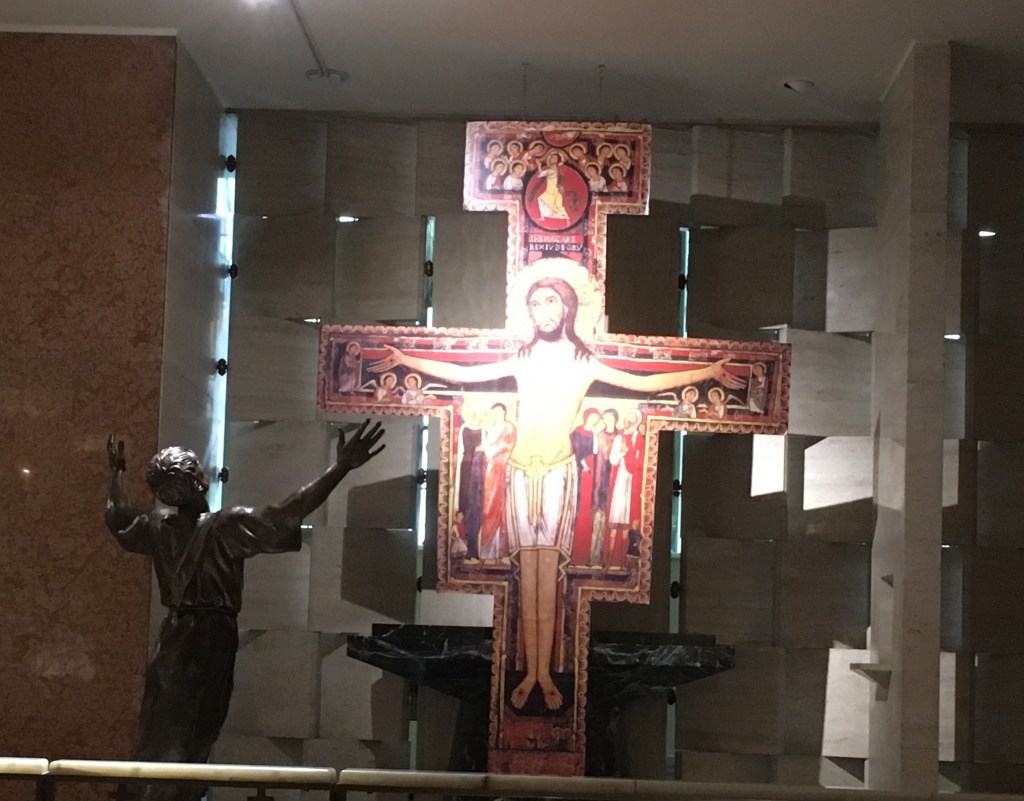
Statue of Saint Francis of Assisi, Our Lady of Lourdes Church, Carver MA

Saint Francis of Assisi


“I have done what was mine to do. May Christ teach you what is yours.” Saint Francis of Assisi

Every October 4th, people around the world, Catholics, Protestants, persons with no declared religion; celebrate the memory of Saint Francis of Assisi. Born in the year of 1182, Francis was an energetic young man, talented, had a gift for drawing other young men of Assisi to himself for parties. He would soon felt the desire to become a knight, a heroic defender of Assisi. Being a commoner, that only way he could achieve this goal, was on the battlefield. He joined his fellow citizens in a military campaign against a rival Italian city state. The battle went terribly wrong for Assisi, Francis and others who survived the battle were captured and held in dungeons. There they waited for their families to ransom them. For some, like Francis, it was a long wait as families and friends tried to gather enough ransom money. Francis returned to Assisi as a broken man.


During his recovery, he would ride out into the countryside. On one such ride, he come across a beggar, who was also suffering from leprosy. Out of fear, Francis turned his horse around, ready to flee. But something made him stop, turn his horse around to face the leper. Getting off his horse, he went to the leper, took his money pouch and put it into the hands of the beggar. And then he kissed them. It was a moment of transformation, a moment of conversion.


Later, Francis found himself walking by a dilapidated chapel. He felt a strong desire to go into the chapel to pray. K in Before a wooden cross, with the image of the Crucified Christ, he knelt. Deep in prayer, Francis heard the Lord speak to him from the cross, “Francis, rebuild my church, which, as you see, is falling down.” And the rest, as they say, is history!

His life of prayer, voluntary poverty, and caring for the poor; has inspired thousands of men and women around the world. Men have joined the Order of Friars Minors, in it’s various formations, to work amongst the poor, to help the ill and disabled. Francis’ lifestyle inspired a young noblewoman, by the name of Clare, to take up a life of poverty and prayer. Drawn by her example, other women joined together to form like communities. Today, these communities bear her name, now called the Poor Clares. And still, the influence of Saint Francis continued to grow, indeed, continues to grow. Lay men and women also found inspiration from Francis’ example. The more they heard about the lives of Francis and his followers, the more they wished to imitate the Franciscan lifestyle. These lay followers soon formed their own groups, to pray together, to help the poor, to serve their families as well.


The Franciscan Family continues, it may experience times of growth, and times of loss; but it continues. Pace e Bene!!

Feast Day of Saint Clare of Assisi – 2023

Saint Clare of Assisi

Clare of Assisi was a daughter of a noble and wealthy parents. It was expected that she would soon be given away in marriage to a nobleman of the city. However, one day she heard Francis of Assisi preaching, and something touched her heart. Accompanied by a friend, she secretly met with Francis, listening to him speak about truly living the Gospel of Jesus Christ.

Clare decided that she too wished to live and follow the way of the Gospel. One evening, with a companion, she slipped out of her family’s mansion, and went to the chapel known as the Portiuncula. There, in the presence of the other friars, she had her hair cut short, and received a plain habit and veil from Francis. She would eventually take up residence in the church of San Damiano. A small community of women began to grow up around her. This included two of her sisters, and eventually, her mother. Francis wrote a form of life to guide them, which Clare would include the Rule she composed later on.

The fame, the popularity of the Poor Sisters, as they were called, began to grow. It grew beyond the borders of the Italian provinces, into Europe, usually with the help and guidance of the Franciscan friars. It was in Prague, in the country of Hungary, that the movement came to the attention of a woman by the name of Agnes, daughter of a king. Inspired by what she learned about Francis, and the lives of Clare and her Poor Sisters. Agnes had a monastery built, and she and other women joined the Franciscan movement. Clare would eventually hear about Agnes of Prague, and she reached out to her, providing spiritual guidance. Four of her letters to Agnes of Prague survived.

“O most noble Queen, gaze upon (Him), consider (Him), contemplate (Him), as you desire to imitate (Him). If you suffer with Him, you will reign with Him. (If you) weep ( with Him), you shall rejoice with Him; (If you) die with Him on the cross of tribulation, you shall possess heavenly mansions in the splendor of the saints, and, in the Book of Life, your name shall be called glorious among men.” Second Letter from Clare to Agnes of Prague

Feast Day of All Saints of the Seraphic Order

Working at home can distract one from other things happening in the world. Today I was busy, so I missed looking at my Franciscan calendar; and towards the end of the day, I suddenly found out that today was the feast day of all saints of the “Seraphic” Order; the Franciscan Order. It was a day to remember in prayer, those who had lived the Gospel, according to the example of St. Francis of Assisi, and lived it well.

I think is was originally established to recognize the the known and unknown saints of the Order of Friars Minor; all three branches, Regular, Conventual, and Capuchin. But on this day, I would remember those persons who were either Poor Clare’s, Third Order Franciscan Brothers and Sisters, or members of the Secular Franciscan Order. I am sure that there are many out, whose lives of prayer and charity has been an example for others.

Almighty, eternal God, you were pleased to make your church illustrious through the varied splendor of the saints of the Seraphic Order. As we venerate their memory in one festival, may we also follow such shining examples of virtue on earth and thus obtain merited crowns in heaven.

We ask this through our Lord Jesus Christ, your Son, who lives and reigns with you and the Holy Spirit, one God, forever and ever. Amen”

Feast of Saint Clare

Illustration by Mark Balma

Saint Clare of Assisi was born in 1194. A daughter of a noble Italian family of the city of Assisi. This young lady, who was not particularly interested in entering a noble marriage, heard Saint Francis preaching, and wanted to live the Gospel life he espoused. Because of the social strictures of her times, she began living the Gospel life behind the walls of a monastery.

From behind those walls, she was still able to inspire people to follow Christ. Women came to be admitted to her community located around the chapel of San Damiano, one of the first churches Francis repaired. They lived a simple life of prayer and work. They claimed nothing for their own, no dowries, no financial endowments. People came from all around Assisi, seeking her advice and guidance.

Her influence could be felt beyond the Italian borders; when a noble woman, Agnes of Prague, inspired by lives of Franciscan friars in Hungary, sought Clare’s advice. Agnes would herself establish a Franciscan monastery. Clare, would advise her in several letters. In her second letter to Agnes, she wrote:

O most noble Queen,
gaze upon Him,
consider Him,
contemplate Him,
as you desire to imitate Him.
If you suffer with Him, you will reign with Him.
If you weep with Him, you shall rejoice with Him;
If you die with Him on the cross of tribulation, you shall possess heavenly mansions in the splendor of the saints and,in the Book of Life, your name shall be called glorious among men.

Saint Clare died on August 11,1253.

Saint Elizabeth of Portugal

Born in 1271, Elizabeth was a daughter of one of the rulers of the kingdom of Aragon; which would eventually become part of modern Spain. At age 12, she was married to the king of Portugal, who at that time was named, Denis. She would eventually give birth to two children. While her husband was a philanderer, she remained faithful to him, and fulfilled all her royal duties. She was also a woman of faith, attending church regularly, and maintaining a life of prayer and charity.

She was drawn into royal politics and diplomacy, when her husband and her son’s relationship had deteriorated to the degree that civil war threatened the country. Through her efforts, peace was maintained. Much later in her life, she worked to prevent war between the kingdom of Portugal and the Spanish kingdom of Castile. For her efforts, she became known as “the Peacemaker!”

When her husband died, she left the royal court and took up residence in a Poor Clare monastery. She put on the habit of a Third Order Franciscan tertiary, and lived a life of prayer and charity. Still, she was continually called on to come out and apply her diplomatic skills to keep peace on the Iberian Peninsula.

Elizabeth died in 1336; in 1625, she was canonized as a Saint, in the Roman Catholic Church.

All Franciscans are called to be peacemakers; in our families, communities, churches, nations, the whole world. We do this by actively working for peace, speaking out for peace, supporting peacemaking organizations. And ultimately, maintaining peace within ourselves!

Feast of St. Clare of Assisi – 2016

Today, the Franciscan Family, with rest of the Catholic Church, celebrates the memory of Clare of Assisi.  A young noblewoman of the medieval city of Assisi, she was inspired by St. Francis of Assisi, to leave a life of wealth and influence, and follow the Gospel of Jesus Christ.

Inspired by the Holy Spirit, guided by Francis, she and a group of liked minded Assisian women, formed a community of prayer, and evangelical poverty.  Living a hidden life of contemplation, with very few known writings in existence; she has been a source of inspiration to many to seek a more intimate relationship with God.

The Order she confounded with Francis still exists, now known as the Poor Clares.

San Damiano Cross Is Going Home!

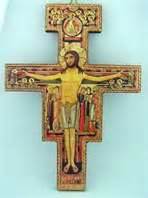
San Damiano crossThe Franciscan blogosphere is buzzing with the news that the Cross from which Christ spoke to St. Francis of Assisi, is returning to the chapel of San Damiano!

During his period of conversion, Francis was known to visit some of the chapels that dotted the Italian landscape around Assisi.  Many were in ill-repair, one of them was the chapel of San Damiano.  Francis was said to have been drawn to the icon cross of Christ Crucified that was hanging in the chapel.  The painter of the Byzantine style cross is unknown, but experts estimate its creation took place around 1100 AD.

The story goes that when Francis entered the chapel, and knelt before the cross, he heard the voice of Jesus Christ coming from the image on it.  The Crucified Christ said to Francis: “go and repair my house, which as you can see is falling into ruins.”  Francis immediately assumed that the Divine command referred only to the chapel he was in.  He leaped to his feet, gave some coins to the priest in residence there, to keep the votive lamp burning in front of the cross, and then set off to purchase building materials.  And the rest is, as they say, history.  After rebuilding San Damiano, Francis went on to rebuild several other countryside chapels.  Christ would soon lead Francis to the realization the his call was not just to repair a few chapels, but to repair the whole spiritual edifice known as the Catholic Church.  The Franciscan movement he founded would draw thousands of individuals to join him.  Among them, a young woman by the name of Clare of Assisi, and other women as well.  They became known as the Poor Ladies of Assisi.  We know them today as the Poor Clares.

Francis installed Clare and her sisters in San Damiano, and they became the custodians of the crucifix.  Later, after the death of St. Clare, a basilica church was built within walls of Assisi, to house her remains.  The Poor Clare community also moved into Assisi, for safety, and they brought the crucifix with them.  The San Damiano Cross has been on display within the Basilica of St. Clare for many years.  Now it is being returned to San Damiano, it is going home.

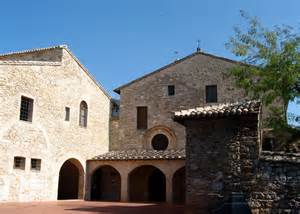
San Damiano Monastery


I Want to Fly to Assisi

Where would I go if could be immediately transported somewhere?  I and other bloggers were challenged to write a post, answering this question.

I would like to be soaring over the green Umbrian countryside of Italy, like a brown sparrow, heading towards the small Italian city of Assisi.  It is an ancient city; most of the buildings were built during the Middle Ages, still being occupied.  I am heading towards a large Catholic Basilica, the Basilica of San Francesco d’Assisi, the last resting place of Saint Francis of Assisi.

Saint Francis was born Giovanni di Pietro di Bernardone, the son of a wealthy cloth merchant.  His father, who made his money selling fine cloth to French merchants, nicknamed his son Francesco as a tribute to the French.  Francis was the city playboy; it was not a party if Francis was not invited.  He was a social climber, who longed to belong to the nobility, to become a knight.  He was a soldier, a prisoner of war, a veteran who was broken in body and soul.  And because of his brokenness, Jesus Christ entered into Francis’ heart; and Francis experienced a conversion, a conversion to the Gospel life.  He began to give his money to any poor person who asked for alms.  He went among the lepers, caring for them, washing their sores, and binding them with bandages.  In the solitude of caves, he began to develop a deep spiritual, prayer life.  He reflected on the gospels, he entered into an intimate relationship with God.  Francis strived to live the Gospel of Jesus Christ.

He gave away everything he owned, dressed like a beggar, in a grey, brownish robe.  He went about serving the poor, preaching in the streets, and marketplaces; proclaiming to all who would listen to him; that God loved them all.  Men, who heard his words, saw his lifestyle, were drawn to Francis, and soon he had twelve followers.  Twelve became a hundred; the hundred became thousands, all promising to live the Gospel of Jesus Christ, according to the example of Saint Francis.  They became the Order of Lesser Brothers, Order Friars Minor.  Women, like Clare of Assisi, were also drawn to this Troubadour of Christ.  With Clare, he formed a contemplative community of women, the Poor Ladies of Assisi, now known as the Poor Clares.  There were other men and women, farmers and tradesmen, wives and seamstresses, who also wanted to live the Gospel, and sought Francis’ guidance.  They became the Brothers and Sisters of Penance, the Third Order of St. Francis; today known as the Secular Franciscan Order.

I became attracted to St. Francis during my third and last year at the archdiocesan seminary.  I had decided to take years’ leave from the seminary; I spent the year with a Christian ecumenical organization which provided worship services in the National Parks.  I was sent to Yellowstone NP, lead services during the weekend, worked in the kitchen the rest of the time.  And in the midst of all that natural beauty, I read about Francis and the Franciscan life.  After two years, I entered formation to become a Friar.  I was to realize that God had another path for me, so I left the Friars, but the Franciscan spirit was already embedded in my heart.  I would later join the Secular Franciscan Order; I have been a professed member for over 25 years.  And I am always wishing I had the means to make a pilgrimage to Assisi, to visit that Basilica.

Francis died on the evening of October 3, 1226, at the age of 44 years old.  He was canonized a saint in 1228.  The friars were already beginning the construction of the Basilica.  The best architects, artisans and artists, the pioneers of the Italian Renaissance, were brought onto the project.  The Basilica was constructed in two levels, the upper church with vaulted ceilings, and large stain glass windows.  The lower church is more enclosed, but both levels are covered with beautiful frescoes, painted by Italian master artists.  The Basilica is considered an international treasure.  However, when the Basilica was finished; the Friars buried Francis in secret; for fear that rival cities would try to steal the remains.  They did such a good job hiding the burial site, that Francis’ body was lost until 1819.  When the burial site was rediscovered, a new crypt was constructed under the lower church.  The crypt has a small chapel, with an altar.  Above the altar is a stone coffin, containing the bones of St. Francis.  It is bound with iron straps, and an iron grill over the entrance.  The walls of the crypt are bare stone, simple, unadorned.  It is there I wish I could sit, contemplating, in the dim light, the last resting place of a man who continues to inspire Christians and non-Christians.  And in the stillness of that place, maybe I can hear a whisper, wishing me and all who come there: “Pace e Bene!”  “Peace and Good!”

Basilica of Saint Francis lower Church Tomb of St Francis Upper Church