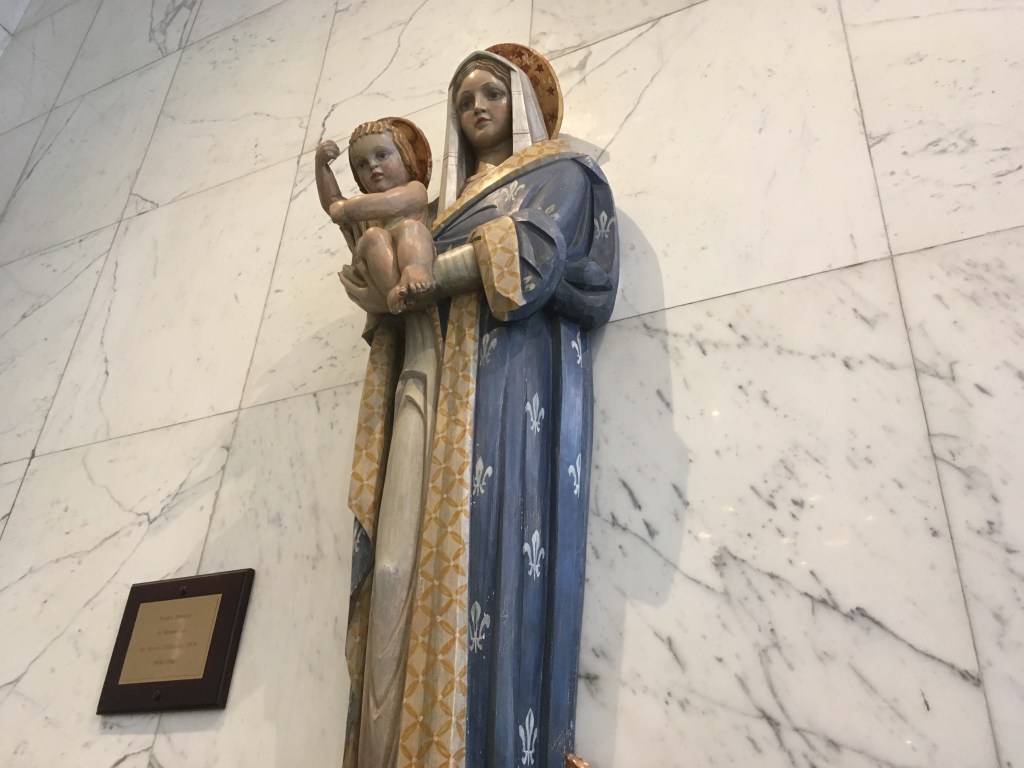
Third Sunday Ordinary Time – Homily

Our Lady of Lourdes Church, Carver, MA

“Moses spoke to all the people, saying ‘A prophet like me will the Lord, your God, will raise up for you from among your own kin; to him you shall listen.”


The Hebrew people were about to enter the promised land, Moses would not be entering the land with them. Up to that moment, it was he who passed on the words that God spoke for them, because the people could not bear hearing the voice of God. Now Moses declared that the Lord would raise up prophets who will speak to them, and share the word of the Lord. The Old Testament speaks of these prophets, Elijah, Isaiah, Jeremiah, and others who faithfully proclaimed the word of God to the people.


Then, the time came, when God wished to speak directly to His people, and to the all persons on earth. It is now that Jesus, the living “Word” of God, makes His appearance. He brought the Word of God directly to the people, changing the relationship humanity had with the Father. By his death and Resurrection, he freed us from the hold sin and death had over us, he showed us how we can draw closer to the Father, to share in the joy and peace such an encounter with our living God can provide.

Through Jesus, we have a closer relationship with the Father, in that relationship, we find ourselves encouraged to change, to be converted into more loving persons, to be drawn closer together as brothers and sisters in Christ. In our experience of God’s love for us, we are all also being called to share in the work of Christ, to proclaim the Good News, to work towards a world that can be transformed into a more loving and peaceful place for all people. We do this by both our words and our deeds. Together or individually, we reach out to the poor, the wounded, the isolated, the desolate. It can be through our acts of charity, large or small. Or it can be by just giving a smile to a stranger, a warm handshake, a gentle embrace. There are so many ways that we can share with the world the joy we all have felt when we experience the love of God.


I would like to close with these words I came across in my reading. It is a quote from the writings of St. Oscar Romero, assassinated Archbishop of San Salvador:


“To know Christ is to know God. Christ is the homily that keeps explaining to continually that God is love, that God is power, that the Spirit of the Lord is upon Jesus Christ, that he is the divine Word, God’s presence among us.”

Changes in the Franciscan Family

St. Francis of Assisi

On October 17, 2023, six American Provinces of Franciscan Friars (Order of Friars Minor) gathered together in a joint Chapter. The Friars then officially merged into one Province, to be known as the Province of Our Lady of Guadalupe. One can see the need for such an action; the number of Friars have been dwindling. It was probably felt that the Friars could be more effective together in one Province, than in multiple Provinces.

At one time, a loooong time ago, I entered the formation program for the Franciscan Friars of Holy Name Province. I would eventually feel that I was being called elsewhere, but I treasured my experiences with the Friars. When I was working in Boston, I would regularly visit St. Anthony’s Shrine, located in downtown Boston. It was maintained by the Friars of HNP. It was and still is a place where people can find spiritual refreshment. A place where one can find a kind and understanding Friar for confession.

Hopefully, this merger will be a source of rebirth for the American Franciscans.

If you are interested in learning more the Franciscans merger, go on Facebook and look for “The Anthonian Franciscan.”

“Good Pope John!”

Pope John XXIII

Saint John XXIII was born Angelo Giuseppe Roncalli, in 1881. Born to an Italian peasant family, the fourth child in a family of fourteen. He felt called to the priesthood, and entered a seminary. Encouraged by his spiritual director, he joined and was professed into the Secular Franciscan Order. He was ordained a priest in 1904.

In 1905, he served as secretary to the bishop of the Diocese of Bergamo, Italy. When World War I began, Father Roncalli was drafted into the Italian Army as stretcher bearer. He would receive promotion to the rank of sergeant for his work. He eventually was made a chaplain within the army.

He would enter the diplomatic service for the Holy See, He was sent to Bulgaria, Turkey and Greece. He would be consecrated a bishop and eventually an Archbishop. While in Turkey, during World War II, he used his diplomatic status to help Jewish families escape the Nazi persecution.

After the war, Roncalli remained active in the Papal diplomatic service. He served as nuncio in France for a time. In 1958, he was both made a Cardinal and named Patriarch of Venice, Italy, which also made him an Archbishop.

In 1958, with the death of Pope Pius XII, a Papal Conclave was called. After eleven ballots with no results. The Cardinals settled on Cardinal Roncalli, as a “caretaker” Pope. He would prove be anything but a “caretaker.” He summoned the world’s bishops to an Ecumenical Council, known today as Vatican II. With his encouragement, the bishops discussed matters concerning the life of the Church, and its relationship with the world. From it would come documents that would renew the Church.

He would not see the end of this great project. John XXIII died on June 3rd, 1963. He was canonized a saint in 2014.

Independence Day; “Happy Fourth of July!!!”

Prayer for the Nation, written in 1791 by Archbishop John Carroll of Baltimore, Maryland, for the inauguration of President George Washington.

We pray, O almighty and eternal God, who through Jesus Christ has revealed thy glory to all nations, to preserve the works of your mercy, that your Church, being spread through the whole world, may continue with unchanging faith in the confession of your name.

We pray Thee, who alone are good and holy, to endow with heavenly knowledge, sincere zeal and sanctity of life, our chief bishop, the pope, the vicar of Our Lord Jesus Christ, in the government of his Church; our own bishop, all other bishops, prelates and pastors of the Church; and especially those who are appointed to exercise among us the functions of the holy ministry, and conduct your people into the ways of salvation.

We pray O God of might, wisdom and justice, through whom authority is rightly administered, laws are enacted, and judgement decreed, assist with your Holy Spirit of counsel and fortitude the president of these United States, that his administration may be conducted in righteousness and be eminently useful to your people over whom he presides; by encouraging due respect for virtue and religion; by a faithful execution of the laws in justice and mercy; and by restraining vice and immorality.

Let the light of your divine wisdom direct the deliberations of Congress, and shine forth in all the proceedings and laws framed for our rules and government, so that they may tend to the preservation of peace, the promotion of national happiness, the increase of industry, sobriety and useful knowledge; and may perpetuate to us the blessing of equal liberty.

We pray for his excellency, the governor of this state, for the members of the assembly, for all judges, magistrates, and other officers who are appointed to guard our political welfare, that they may be enabled, by your powerful protection, to discharge the duties of their respective stations with honesty and ability.

We recommend likewise, to your unbounded mercy, all our brethren and fellow citizens throughout the United States, that they may be blessed in the knowledge and sanctified in the observance of your most holy law; that they may be preserved in union, and in that peace which the world cannot give; and after enjoying the blessings of this life, be admitted to those which are eternal.

Finally, we pray to you, O Lord of mercy, to remember the souls of your servants departed, who are gone before us with the sign of faith and repose in the sleep of peace, the souls of our parents, relatives and friends; of those who, when living, were members of this congregation, and particularly of such as are lately deceased, of all bene who, by their donations or legacies to this Church, witnessed their zeal for the decency of divine worship and proved their claim to our grateful and charitable remembrance. To these, O Lord, and to all that rest in Christ, grant, we beseech you, a place of refreshment, light and everlasting peace, through the same Jesus Christ, Our Lord and Savior.

Amen.

Twelfth Sunday of Ordinary Time Homily

Our Lady of Lourdes Church, Carver MA.

Jeremiah 20: 10-13
Romans 5: 12-15
Matthew 10: 26-33

“Jesus said to the Twelve: ‘Fear no one.’”


Today’s reading from the Gospel of St. Matthew is part of Jesus’ instructions to the Twelve Apostles, as he is about to send them off on a preaching tour throughout the Galilee. I can picture the look on the Apostles faces as they prepare for this journey. As much as they want to do this, they were also hesitant, because of what they may encounter. They could guess what the reactions of the Pharisees would be. And then there was also the Roman occupiers; who have governed the province with an iron fist. They would maintain peace at any cost, even if meant cracking open some heads. So the Apostles would not be blamed if they were all feeling a little apprehensive. Jesus keeps telling them that they will not be alone, that the Father would be watching over them; so he tells them to shout out the Good News; that salvation was at hand. Shout it out in the village squares. Shout it out in vineyards and throughout the fields. Shout it out!


And Jesus’ message holds very true for us in our present times. And there is such a great need for people in our communities to hear this Good News. There is a great need for people out there to experience the Good News of Jesus Christ being lived, here and now!


And that is challenge that is before all of us. And to meet that challenge requires continuing conversion on our part. To realize and to accept the fact that with all our own faults and failures, God does loves us, cares for us. And if that is true, we, in turn, must love others. Loving those we call friends, and loving those we may have a hard time accepting as friends; bringing them all together as brothers and sisters in Christ.


So as Jesus is always reaching out to us with love; so we also must reach out to those we encounter daily, relative, friend or stranger. And we let them know, by word and deed, that there are people out there who care for them.


“So do not be afraid; you are worth more than many sparrows. Everyone who acknowledges me before others I will acknowledge before my heavenly Father.” (Matthew 10: 26-33)

Feast Day of Saint Anthony of Padua

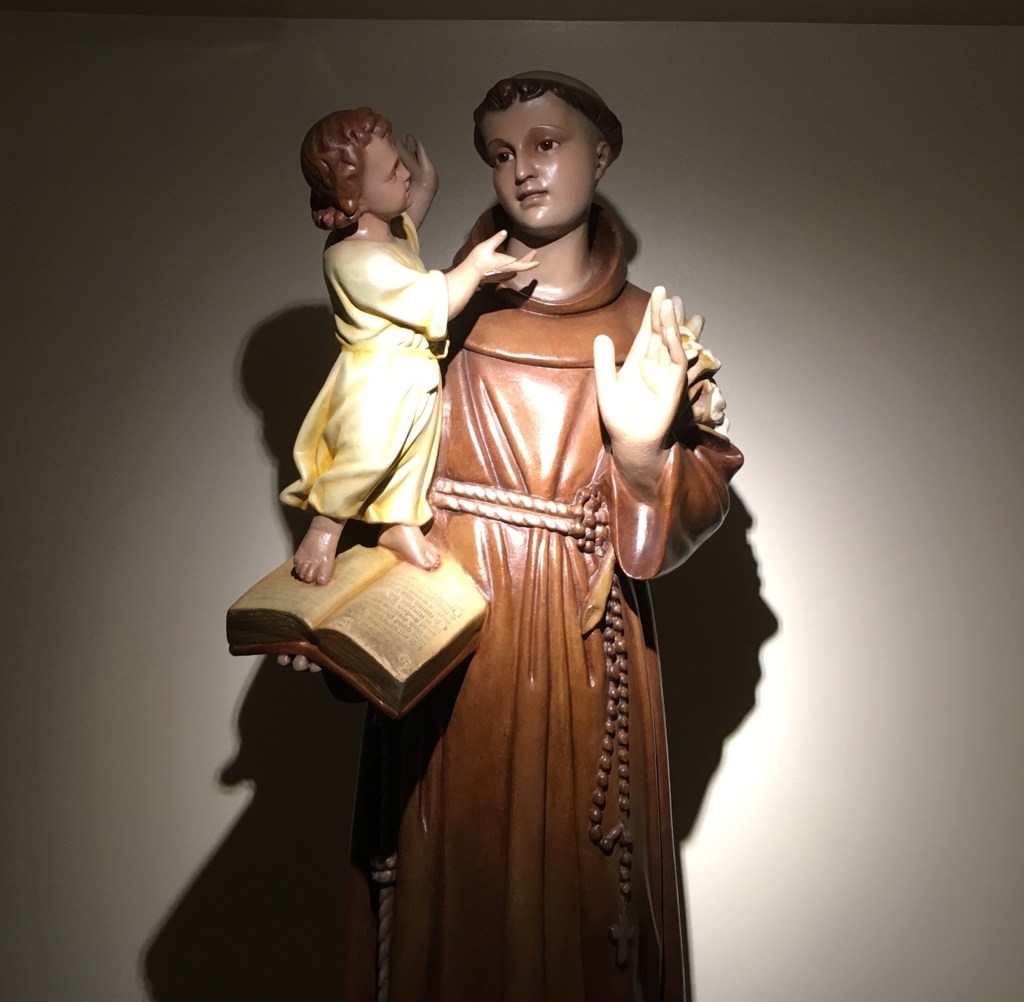
Saint Anthony of Padua with the Christ Child

Among the list of Franciscan saints, the most popular among them, after Saint Francis of Assisi, is Saint Anthony of Padua (1195-1231). But, were it not for a chance encounter, things might have been different.

He was born in Lisbon, Portugal, with the name of Fernando Martins de Bulhoes. The family was well off, and arranged for him to be educated in a local cathedral school. He would eventually join an Augustinian community near Lisbon. He would be ordained a priest and was giving the responsibility of welcoming visitors and guests to the monastery. It was then, that one could say, that the Holy Spirit then took over. Near the monastery was a small community of newly arrived Franciscan friars. They had established a small hermitage, and Fernando had frequent contact with them. He found their evangelical way of life attractive.

The Franciscans had sent a group of their brothers to North African country of Morocco, to evangelize. This group would suffer beheading at the hands of the Moroccan rulers. Their remains were returned to Portugal, and were buried at the Augustinian monastery. Fernando was inspired by their courage and their faith. He asked for, and received permission from the Augustinians to transfer over to the Franciscan order. He took the name Anthony, after an early Saint, Anthony the Great.

He joined another group of Franciscan friars being sent to Morocco, but he became seriously ill upon arrival. He was sent home back to Portugal. But stormy weather drove his ship further into the Mediterranean, winding up in Sicily. He went to the last great gathering of Franciscan friars with Saint Francis present. At the conclusion of it, he was sent to a small community of lay brothers, in Italy. There, the story goes, the community was celebrating the ordination of a friar, but the guest speaker had not arrived. Anthony was asked to preached. It was then the depth of his learning was revealed, as was also his skill as a speaker. And the rest, as they say, is history.

He would be sent out on preaching tours, up and down throughout Italy. It was said the thousands of people gathered to hear him speak. They came away inspired to live the Gospel of Jesus Christ more intensely. Francis himself, gave Anthony the work of teaching theology to the friars, and how to preach.

He became ill in his thirties, and died on June 13, 1231, in Padua.

He was canonized as Saint in 1232. He proclaimed a Doctor of the Church by Pope Prius XII, in 1946.

Sons & Daughters of St. Francis and St. Clare.

Saint Catherine of Bologna

St. Catherine was born into a noble family of Bologna, Italy, in 1413. As she grew into a teenage girl, it became obvious that she wanted to live a life very different from other daughters of the nobility. She persuaded her parents to allow her to join a community of lay Franciscan women (Secular Franciscan Order).

As a member of that community, she grew in the spiritual life, both the joys and challenges. She became known as a mystic; known to have experienced intense visions of Christ and the Blessed Mother. Now Bologna had a community of Poor Clare sisters, that must have been afflicted with laxity, because Catherine was ordered to take over the community.

She lead the convent by example, gentleness, and wisdom. The community became known for it’s holiness of life, attracting many new novices.

Saint Catherine died in 1463. She was canonized a Saint in 1712. Her feast day is March 9.

“Blessed be God in his angels and in his saints.”

Baptisms at St. Peter’s Church, Plymouth MA

O God, whose Son, baptized by John in the waters of the Jordan, was anointed with the Holy Spirit, and, as he hung upon the Cross, gave forth water from his side along with blood, and after his Resurrection, commanded his disciples: “Go forth, teach all nations, baptizing them in the name Father and of the Son and of the Holy Spirit,” look now, we pray, upon the face of your Church and graciously unseal for her the fountain of Baptism.”

From the Order of Baptism for Children

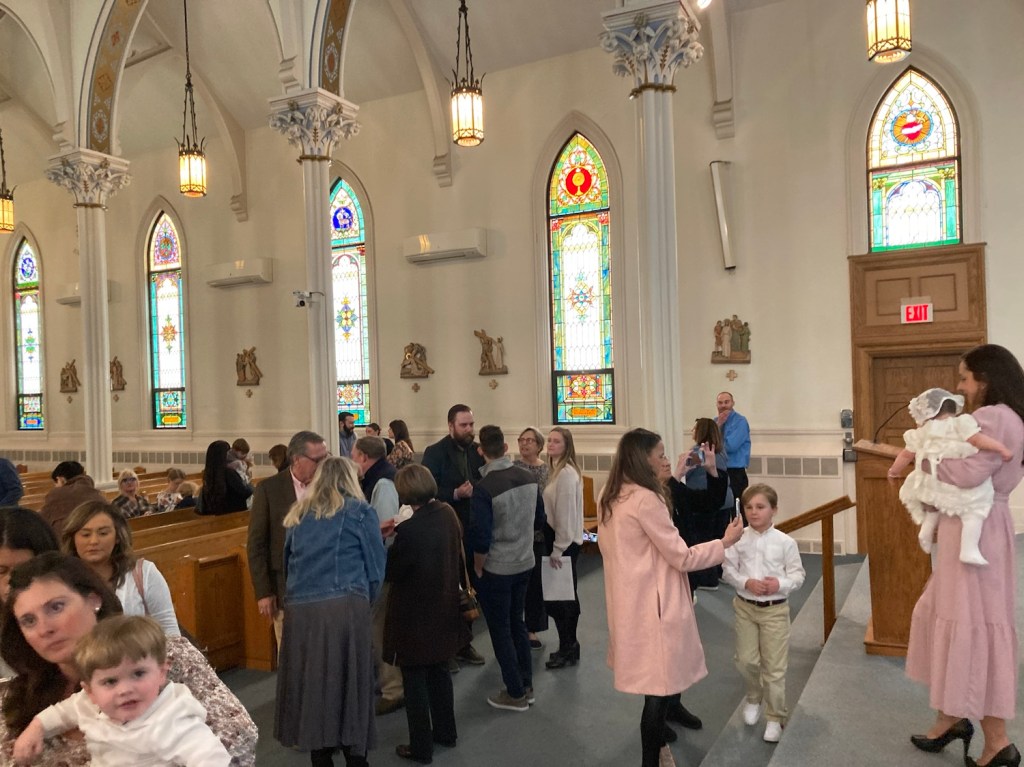
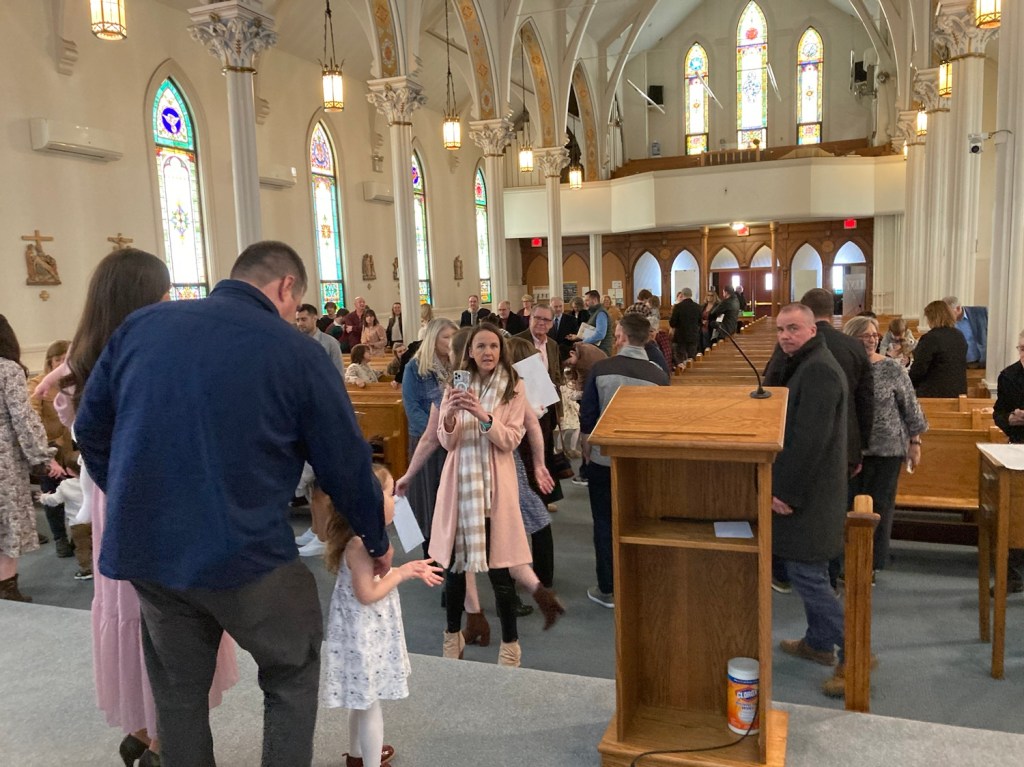
On February 19, 2023, I had the honor and joy to baptize 4 beautiful children; welcoming them into the Catholic Church!

Was not able to snap any good pictures, but I would like to share what I did snapped!

Homily; Solemnity of Mary, The Holy Mother of God

Photo taken at Saint Anthony Shrine, Boston MA

We begin a new year, it is mixed with both anticipation and fear, beginnings and endings. For us Catholics, we end this year with the sad news of the death of Pope Emeritus Benedict XVI. He had an definite affect on the Catholic Church, before he became Pope, during his Papacy, and afterwards; and on the world around us.


We are beginning a new year. Liturgically, we are celebrating the Solemnity of Mary, the Holy Mother of God. We are reflecting on the important role of Mary in the salvation of humanity. We celebrate her courage to say yes, her willingness to say yes to bearing the child who would be the savior of the world. She was willing to become Mother of God the Son.

For that reason, for that courage, for that love that she had for God, for that love she had for all humanity; she is remembered and celebrated by Catholics and other Christians.


But I would challenge us to see Mary as a real human person. I am sometimes concerned, afraid that we treat Mary and our other saints, as characters in a show, play, movie and not as a real person. And Mary was a real human person. It was her courage and her love for God that allowed her to say response to the angel’s declaration, the Annunciation: “ Behold, I am the handmaid of the Lord. May it be done to me according to your word.” (Luke 1)


She should courage and strength, making that journey with Joseph to Bethlehem; and finding out that they had to stay in stable. She had the courage and the strength to give birth to the baby who would soon be named Jesus.


We have little information on what life was like for this little family when they finally were able to return to Nazareth. How often did she reflect on what had happened to her, her little child and her husband. Today’s gospel mentioned that she kept all that she experienced in her heart, reflecting on them, what they meant for her and for her son.
We know that she cared for her neighbors, friends and relatives. She and Jesus were invited to a wedding, what the relationship they had with the wedding party, we do not know; but it was there that she asked Jesus to come to the aid of the bridegroom with their wine shortage. And a son cannot say “no,” to his mother.


Mary was present at her Son’s suffering and death on the cross. She must have mourned deeply over witnessing that sight.
In our reflections on Mary, we need to remind ourselves that she was as human as the rest of us. That she experienced great joy, great hope; as well as great pain, and great sorrow. And it is these experiences that makes her a good advocate for us before God. So we can turn to her in our need:


“Hail holy Queen, mother of mercy, Our life, our sweetness and our hope. To you we do cry, poor banished children of Eve. To you do we send up our sighs; mourning and weeping in valley of tears. Turn then, most gracious advocate, your eyes of mercy toward us, and after this exile, show unto us the blessed fruit of your womb, Jesus. O clement, O loving, O sweet Virgin Mary!”

“Good Pope John!”

Pope John XXIII

Saint John XXIII was born Angelo Giuseppe Roncalli, in 1881. Born to an Italian peasant family, the fourth child in a family of fourteen. He felt called to the priesthood, and entered a seminary. Encouraged by his spiritual director, he joined and was professed into the Secular Franciscan Order. He was ordained a priest in 1904.

In 1905, he served as secretary to the bishop of the Diocese of Bergamo, Italy. When World War I began, Father Roncalli was drafted into the Italian Army as stretcher bearer. He would receive promotion to the rank of sergeant for his work. He eventually was made a chaplain within the army.

He would enter the diplomatic service for the Holy See, He was sent to Bulgaria, Turkey and Greece. He would be consecrated a bishop and eventually an Archbishop. While in Turkey, during World War II, he used his diplomatic status to help Jewish families escape the Nazi persecution.

After the war, Roncalli remained active in the Papal diplomatic service. He served as nuncio in France for a time. In 1958, he was both made a Cardinal and named Patriarch of Venice, Italy, which also made him an Archbishop.

In 1958, with the death of Pope Pius XII, a Papal Conclave was called. After eleven ballots with no results. The Cardinals settled on Cardinal Roncalli, as a “caretaker” Pope. He would prove be anything but a “caretaker.” He summoned the world’s bishops to an Ecumenical Council, known today as Vatican II. With his encouragement, the bishops discussed matters concerning the life of the Church, and its relationship with the world. From it would come documents that would renew the Church.

He would not see the end of this great project. John XXIII died on June 3rd, 1963. He was canonized a saint in 2014.